


Here's an insight into how we make money. While we strive to be comprehensive, the compensation we receive can influence the products, companies, or services we showcase and review. Not all available options may be featured on this page.
Pepperstone vs Capital.com Comparison – 2026


Comparison Table
Pepperstone | Capital.com | |
|---|---|---|
Overall Rating | 4.7 | 4.5 |
Trust | 4.5 | 4.4 |
Fees | 4.4 | 4.1 |
Platforms and Tools | 4.8 | 4.9 |
Tradable Instruments | 5.0 | 5.0 |
Customer Support | 4.9 | 4.8 |
Research | 4.4 | 4.2 |
Deposit and Withdrawal | 5.0 | 4.9 |
Account Types and Terms | 4.9 | 4.0 |
Education | 4.2 | 4.4 |
Regulators & Max Leverage | 1:30 (FCA), 1:200 (SCB), 1:30 (BaFin), 1:30 (ASIC), 1:30 (DFSA), 1:400 (CMA), 1:30 (CySEC), 1:30 (CMA UAE), 1:30 (CMA UAE) | 1:30 (FCA), 1:30 (ASIC), 1:30 (CySEC), 1:200 (SCB), 1:300 (CMA UAE) |
Foundation Year | 2010 | 2016 |
Fees Test | Low | Medium |
Tradable Instruments | 1,494 | 6,313 |
Trading Platforms | MT5, cTrader, MT4, TradingView, Pepperstone WebTrader, Pepperstone Mobile App | MT4, TradingView, Capital.com Web Trader, Capital.com App |
Minimum Deposit | $0 | $20 |
Read Reviews |
I began reviewing forex brokers for FXEmpire in 2022, following my 9-year career as a retail trader and market analyst. I also took an active role in helping develop our rating system, based on my experience with what traders need and value.
This comparison article pits Pepperstone against Capital.com and is based on my hands-on tests of each broker. All data in this article is verified and relevant as of June 2026.
With Pepperstone, I used a Standard account with the broker’s proprietary WebTrader platform. I also checked Pepperstone’s mobile app. For Capital.com, I used the broker’s universal trading account via the flagship Capital.com Web Trader and the Capital.com App.
I identified the key strengths and weaknesses of Pepperstone and Capital.com to work out which type of trader would benefit most with each broker. Here’s what I found out:
Top Reasons to Choose Pepperstone or Capital.com
Pepperstone stays ahead of the curve with its low fees and diverse account types. The broker appeals to cost-sensitive traders, especially those interested in forex, metals, stocks, indices, and crypto trading. I captured spreads and commissions below the industry average on popular instruments across these and other markets. I also learned that Pepperstone offers access to nearly 1400 tradable instruments across its several highly practical platforms. Between MT4, MT5, cTrader, TradingView, and the Pepperstone WebTrader, the broker’s flagship made the strongest impression on me with its clean-cut design and robust charting.
Capital.com has earned a reputation as one of the highest-rated brokers on our website. It blows the competition out of the water with its massive offering of almost 8,000 tradable instruments and knock-out options. I found this diverse catalog well-suited for both conservative traders looking to cap their market exposure with low-risk securities and speculative traders seeking exposure to more volatile assets. Capital.com has also developed a powerful web-trading platform with FIX API integration and offers practical educational content. Last but not least, Capital.com boasts an average order execution speed of around 25ms, easily beating the industry average of 60ms.
| Pepperstone Better Fees |
Capital.com Better Tradable Instruments Selection |
| Low spreads across most available asset classes | 7,800+ CFDs and knock-out options |
| Commission-free accounts | Capital.com WebTrader with FIX APIs supported |
| Average commissions and swaps | MT4, MT5, and TradingView as alternatives |
| No minimum deposit | Unique Investmate app for education |
| MT4, MT5, cTrader, TradingView, Pepperstone WebTrader | Lightning-fast execution around 25ms |
| FIX APIs for low-latency trading | No commissions |
Pepperstone: Snapshot
The Australian broker Pepperstone was started in 2010. Since then, the financial derivatives broker has obtained multiple licenses from Tier-1 regulators, including the FCA, CySEC, ASIC, and BaFin. But the thing that immediately jumps out about Pepperstone is its low trading costs. I was most impressed by its 0.9-basis-point spread on the DAX 40 and $15 spread on the Bitcoin.
Pepperstone: Who is it for?
From my series of tests with Pepperstone, I found the broker best suited for active day traders. They can make use of its commission-free Standard account with spreads on popular instruments kept at a minimum. The only exception was the above-average WTI spread. I also consider Pepperstone a good option for swing traders as the swaps we recorded were in the low-to-average range.
What Makes Pepperstone Stand Out?
Pepperstone’s defining feature is its low trading fees, especially on stocks. I captured the broker’s Apple and Tesla spreads at the time of the New York market opening and measured both in the 3-7 cents range. For comparison, the industry average spread on Tesla stocks fluctuates at around 51 cents per share. The $2.52 swap long on the GBPJPY pair was another highlight, positioning Pepperstone as one of the best brokers for overnight trading on FX Crosses.
| Recommended in 4 best broker guides: |
| Forex Brokers | CFD Brokers | Zero Spread Brokers | Brokers with Low Minimum Deposit |
Capital.com: Snapshot
Capital.com was founded a bit later, in 2016. Originally based in Cyprus, it has expanded its operations globally and today holds licenses from CySEC, the UK’s FCA, and other regulators. The broker breaks the mold of conventional forex brokers with its impressive selection of 7,800+ tradable instruments. Capital.com also held its own on the fees and platforms fronts, offering below-average spreads and powerful trading platforms that suit a range of trading styles.
Capital.com: Who is it for?
Capital.com provides its clients access to some pretty rare markets, enabling them to exploit different trading opportunities and hedge against unpredictable price swings. Its ETF selection alone exceeds 900 contracts, which ranks Capital.com among the premier options for low-risk traders and hedgers. The broker also reports average order execution speeds of around 25ms, making it a more than attractive choice for scalpers and high-precision traders.
What Makes Capital.com Stand Out?
Capital.com stands head and shoulders above most other brokers in its category thanks to its impressive assortment of tradable instruments. I counted more than 5,000 CFDs and 2,800 knock-out options. These options help you limit the risk you face with each position and allow you to bet on directional price swings. Other strong points of Capital.com’s offering include its 543 crypto contracts, 147 currency pairs, and 4,500+ stocks.
| Recommended in 8 best broker guides: |
| Forex Platforms | Crypto | TradingView | Platforms in Europe | CySEC | API | Guaranteed Stop-Loss Order | Gold Apps |
Trust
Pepperstone vs Capital.com Trust and Regulation Comparison
Trust Rank | 4.5 | 4.4 |
Regulators & Max Leverage | 1:30 (FCA), 1:200 (SCB), 1:30 (BaFin), 1:30 (ASIC), 1:30 (DFSA), 1:400 (CMA), 1:30 (CySEC), 1:30 (CMA UAE), 1:30 (CMA UAE) | 1:30 (FCA), 1:30 (ASIC), 1:30 (CySEC), 1:200 (SCB), 1:300 (CMA UAE) |
Foundation Year | 2010 | 2016 |
Publicly Traded |

Pepperstone ranks among the best and most tightly supervised forex brokers in the industry. It is authorized by the FCA, CySEC, BaFin (Germany), ASIC, DFSA (UAE), CMA (Kenya), and the SCB (Bahamas). I pored over its legal documents, including its client agreement and risk notice, to assess Pepperstone’s depth of client protections. I confirmed that the broker segregates client funds and provides negative balance protection across all of its entities. I also did a background check on Pepperstone via its LinkedIn page. The broker has 900+ associated members, which is more than with most other brokers, and speaks to Pepperstone’s solid business model.
Capital.com is also supervised by multiple authorities, including CySEC, FCA, ASIC, CMA (UAE), and SBA (Bahamas), and adheres to the industry’s strictest safety regulations. From my research into Capital.com, I learned that the broker segregates client funds and provides negative balance protection across all its entities. I also learned that the company employs more than 800 professionals globally, which is well above the industry average of 50. Capital.com is also fairly transparent. Its legal documents are readily available and written in an easy-to-understand way. The broker’s website also features a live spreads screener, which lets you assess its fee competitiveness and transparency.
If you want to learn more about how forex brokers are regulated, we have a dedicated article on it here.
Fees
Pepperstone vs Capital.com Spreads, Fees and Commissions Comparison
Fees Rank | 4.4 | 4.1 |
Inactivity Fee |

Pepperstone is making waves with its tight spreads. Using the Standard account, I observed a $15 BTCUSD spread, stock spreads in the 3-6 cents range, and a GBPJPY spread around 2.0 pips. This makes Pepperstone a great option for forex, crypto, and stock traders. Its index spreads also came in below the industry benchmark, while the 1.0-pip EURUSD cost was aligned with it. The only outlier in my testing was a 5-7 cent WTI spread, which capped the ceiling for energy traders.
If you are a high-volume trader, Pepperstone has got you covered with its Razor account featuring raw spreads from 0.0 pips and a $6 round-trip commission on forex and shares. This commission rate applies when trading on Pepperstone’s cTrader platform and matches the industry average. Commissions on MT4/MT5, TradingVew and Pepperstone WebTrader platforms are slightly higher.
| Account Type | Standard Account | Razor Account | ||||
| Instrument | Live Spread AM | Live Spread PM | Industry Average* | Live Spread AM | Live Spread PM | Industry Average* |
| EUR/USD | 1.1 Pips | 1 Pip | 1.2 Pips | 0.0 Pips | 0.0 Pips | 0.06 Pips |
| GBP/JPY | 2.4 Pips | 1.6 Pips | 2.9 Pips | 1.4 Pips | 0.5 Pips | 1.02 Pips |
| Gold | 18 Cents | 14 Cents | 36 Cents | 16 Cents | 14 Cents | 11 Cents |
| WTI Oil | 7 Cents | 5 Cents | 4 Cents | 4 Cents | 3.6 Cents | 2.7 Cents |
| Apple | N/A | 3 Cents | 33 Cents | N/A | 5 Cents | 24 Cents |
| Tesla | N/A | 6 Cents | 51 Cents | N/A | 7 Cents | 41 Cents |
| DAX 40 | 0.9 Pips | 0.9 Pips | 2.7 Pips | 0.09 | 0.09 | 1.5 Pips |
| Dow Jones 30 | 2 Pips | 2 Pips | 3.7 Pips | 2 Pips | 2 Pips | 2.2 Pips |
| Bitcoin | $15 | $15 | $51.45 | $15 | $19.49 | $23.69 |
*These industry average values are derived from a pool of nearly 70 brokers that we tested. The numbers were last updated in January 2026. A commission of 2 cents per share applies to US shares in both Standard and Razor accounts. For the Razor account, commissions also apply to forex pairs.
Pepperstone also got my stamp of approval for its competitive swaps. The highlight of my testing was a $2.52 swap-long on GBPJPY. This overnight cost outpaced the industry average several times and confirmed Pepperstone’s status as a broker that serves swing traders.
I used Capital.com’s universal account for my live tests. It features commission-free trading and floating spreads from 0.6 pips. I collected my data during the London and New York market openings and found that Capital.com outperforms industry averages across currency pairs, stocks, and indices. Moreover, this was my third test of the broker, which I found has consistently delivered low EURUSD spreads of 0.6 pips. This makes Capital.com a great fit for trading FX Majors. On the other hand, Capital.com’s $50 BTCUSD spread eclipsed the industry benchmark.
Capital.com’s swaps are a different story, though. They range from ultra-low, such as the $15 gold and $21 DJI30 swap longs I observed, to the massive $126 WTI and $61 BTCUSD swap longs. This means that Capital.com is only suitable for overnight trading in certain cases, such as when trading metals and indices.
| Instrument | Swap Long | Industry Average |
| EURUSD | Charge of $8.80 | $7.64 |
| GBPJPY | Credit of $4.43 | $7.74 |
| Gold (XAUUSD) | Charge of $15.41 | $65.65 |
| Crude Oil | Credit of $126.13 | $2.22 |
| Apple | Charge of $21.43 | $6.83 |
| Dow Jones 30 | Charge of $21.43 | $86.06 |
| Bitcoin | Charge of $61.64 | $20.05 |
*The values apply to one full base currency contract (100,000 units).
Lastly, I found that Capital.com does not charge any non-trading fees, except a €10 dormancy fee. It is applied after a year of inactivity. This is pretty standard for the industry.
I plotted Pepperstone’s and Capital.com’s trade costs (excluding swaps) for different assets and compared them with the industry average.
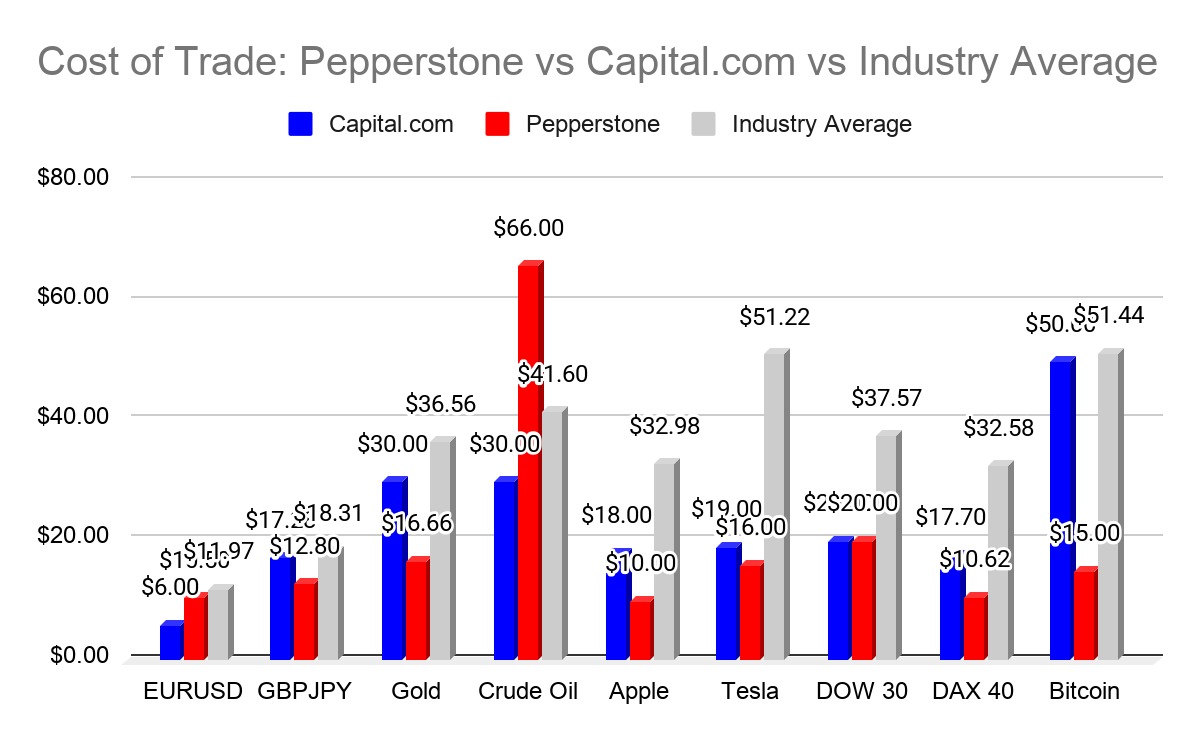
On FX pairs, I found Capital.com the better option for trading Majors, though Pepperstone takes the cake for Crosses trading. Pepperstone’s $16.66 gold cost is also markedly better than Capital.com’s $30 price tag for the precious commodity. However, the Cyprus-based broker is the obvious choice for energies trading – beating both the industry average WTI cost of $41.60 and Pepperstone’s $66.
Both brokers beat the industry average stock prices, with Pepperstone offering slightly better Apple and Tesla costs than Capital.com. I also learned that they have the same $20 DJI30 cost of trade, though Pepperstone provides better conditions for trading the German DAX index. Pepperstone is also the premier choice for trading cryptocurrencies, as shown by its $15 BTCUSD cost of trade against Capital.com’s $51.
Trading Platforms and Tools
Pepperstone vs Capital.com Trading Platforms Comparison
Platform Rank | 4.8 | 4.9 |
Trading Platforms | MT5, cTrader, MT4, TradingView, Pepperstone WebTrader, Pepperstone Mobile App | MT4, TradingView, Capital.com Web Trader, Capital.com App |
Mobile Apps | Android, iOS | Android, iOS |
Pepperstone delivers a strong lineup of trading platforms, including its own flagship Web Trader, the renowned MT4 and MT5, and the superior cTrader and TradingView. I personally prefer the broker’s custom-built trading station for its advanced charting capabilities, though chart artists may also opt for TradingView, known for its high-definition price-action charts and social trading hub. I consider both Pepperstone’s Web Trader and TradingView as great options for day trading.


Algorithmic trading enthusiasts can turn to MetaTrader or cTrader. The one features off-the-shelf Expert Advisors (EAs) for automated trading and a built-in strategy tester. The other has an excellent coding environment where experienced algo traders can program their own algorithms and backtest them using simulated trading setups.
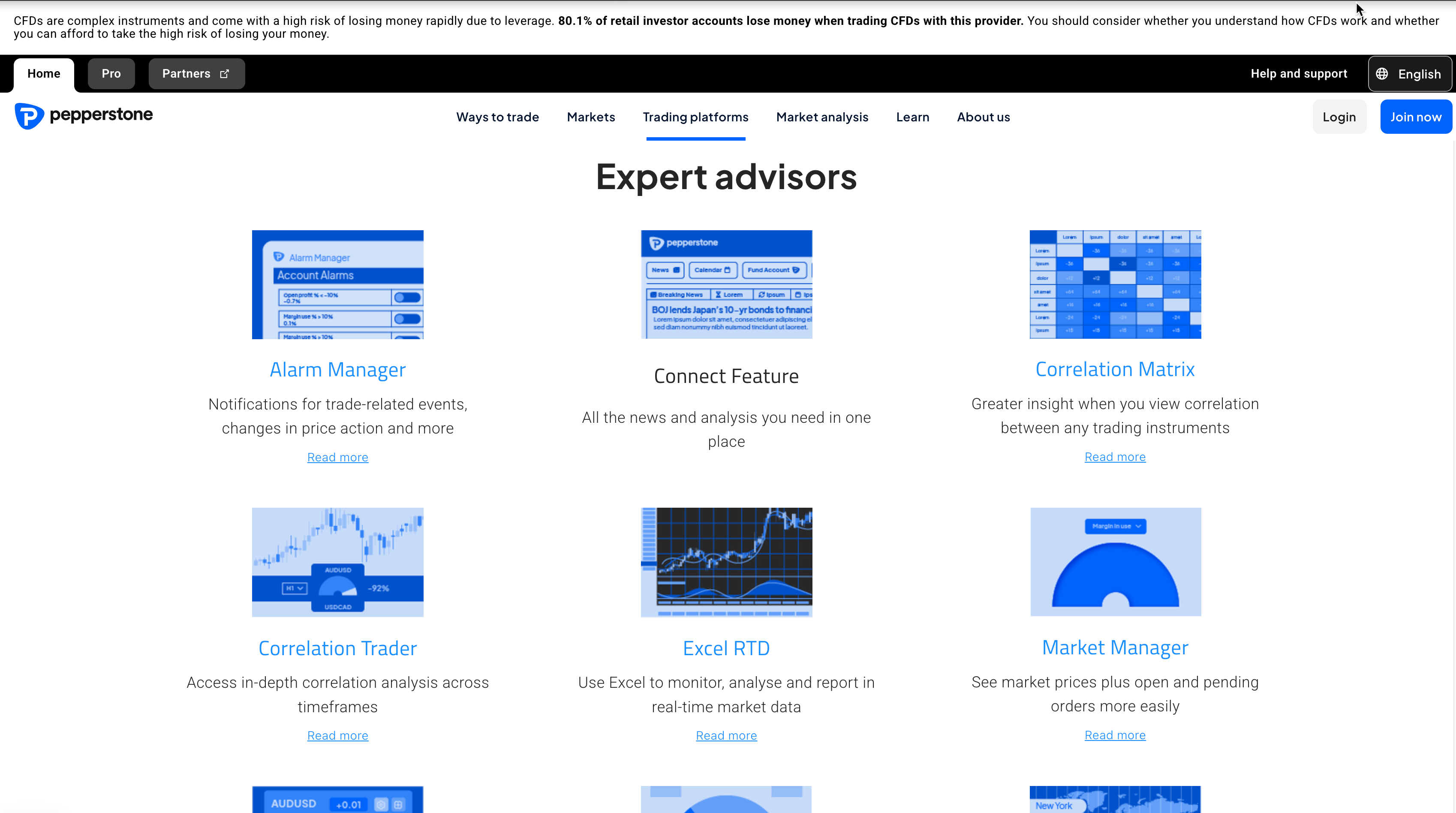
Pepperstone does not disappoint with its offering of trading tools either. I learned that the broker provides free Virtual Private Server (VPS) hosting for low-latency trading, as well as FIX APIs integration. The latter allows experienced traders to tap into the interbank market and obtain raw spreads directly from an exchange’s order books.
Capital.com also has an impressive stack of trading platforms, including its own Web Trader, MT4, MT5, and TradingView. I identified two great perks to the Capital.com Web Trader. First, the platform’s ‘Discover’ mode features on-hand trading alerts and technical analyses that notify day traders of emerging trading setups. Second, the ‘Trade Academy’ feature contains numerous learning materials aimed at first-time and intermediate traders.


Speaking of learning materials, Capital.com should also be credited for developing the innovative Investmate learning app, which offers the same vast library of educational content accessible anywhere, enabling learning on the go. I also really appreciated the built-in tests after each lesson, allowing newbies to track their learning curve.
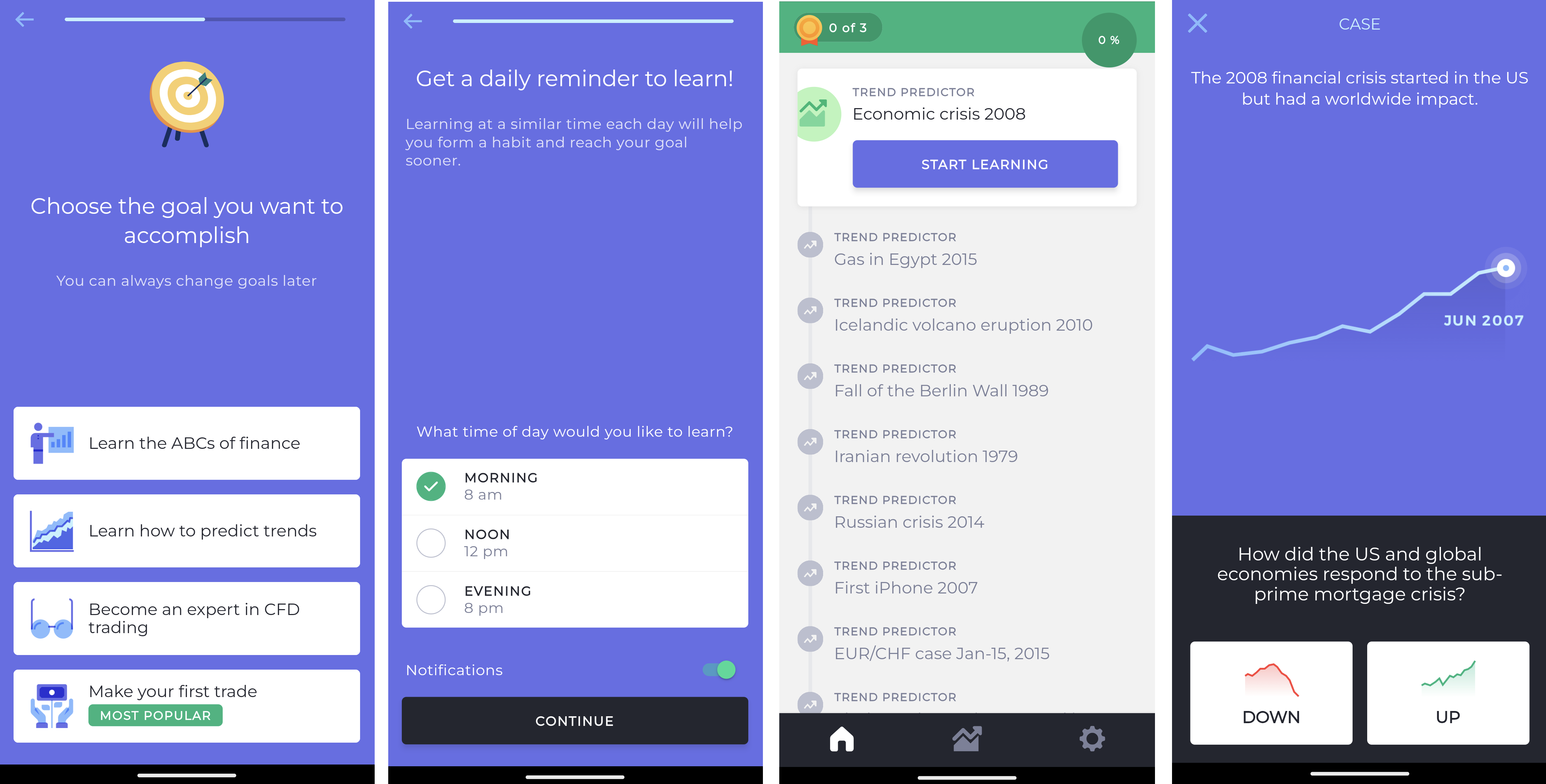
Getting back to the Capital.com Web Trader, I also learned that it can be customized for FIX API trading. The service is used for Direct Market Access (DMA) trading at the interbank level. Based on all of that, I found Capital.com’s platform and tools ecosystem great for day traders, news traders, beginners, and seasoned traders.
Tradable Instruments
Pepperstone vs Capital.com Instruments Selection Comparison
Tradable Instruments Rank | 5.0 | 5.0 |
# Tradable Instruments | 1,494 | 6,313 |
# Currency Pairs | 90 | 147 |
# Commodities | 40 | 97 |
# Crypto | 51 | 543 |
# Stocks | 1,200 | 4,573 |
# Indices | 23 | 45 |
Pepperstone earned top scoring in our tests for its vast and diverse selection of tradable instruments. I confirmed the broker offers more than 1,380 assets across currency pairs, commodities, stocks, indices, cryptos, and ETFs. The bulk of the offering comprises share CFDs, including 1,100+ stocks of US, UK, Hong Kong, Australian and EU companies. The 90+ FX pairs and 51 crypto assets also exceed the industry average.
Another unique aspect of the offering is the inclusion of 116 24-hour stocks, which give traders access to the market even on weekends. I thus found Pepperstone a great pick for stock, forex, and crypto traders.
Capital.com goes further still in this category. It offers 5000+ CFD contracts and 2,800 knock-out options across FX pairs, commodities, stocks, indices, cryptocurrencies, and ETFs. Its stack exceeds the industry average of 350-500 by a wide margin and allows you to exploit various market opportunities. You can use CFD contracts on your favorite instruments to bet on major price fluctuations or go for knock-out options when you expect calmer markets.
The highlights of Capital.com’s offering are the 147 FX pairs and 543 cryptocurrencies – more than with most other brokers. The 900+ ETFs are another strong. This impressive range of low-risk securities serves more conservative traders who want to cap their market exposure while investing in assets with the potential for long-term price growth.
Customer Support
Pepperstone vs Capital.com Customer Support Comparison
Customer Support Rank | 4.9 | 4.8 |
Availability | Available 24/7 | Available 24/7 |
Live Chat |
You can reach out to Pepperstone 24/7 via live chat, email, or phone. Help is available in 9 languages, including English, Spanish, and Arabic. I conducted a series of tests and found the agents knowledgeable and responsive. I inquired about Pepperstone’s trading accounts, minimum deposit requirements, and trading tools, and the agents delivered satisfactory answers.
Capital.com also offers 24/7 customer support via live chat, email, and over the phone. I conducted a series of tests to assess the agents’ level of knowledge and was generally satisfied with the assistance I received. They responded well to basic queries about the broker’s account parameters and equity requirements for trading instruments from different asset classes. My one gripe with Capital.com’s customer support is that it is currently only available in English.
Research
Pepperstone vs Capital.com Research Tools Comparison
Research Rank | 4.4 | 4.2 |
News (Top-Tier Sources) | ||
Economic calendar | ||
Videos/Webinars | ||
Trading Central (Recognia) | ||
Autochartist |
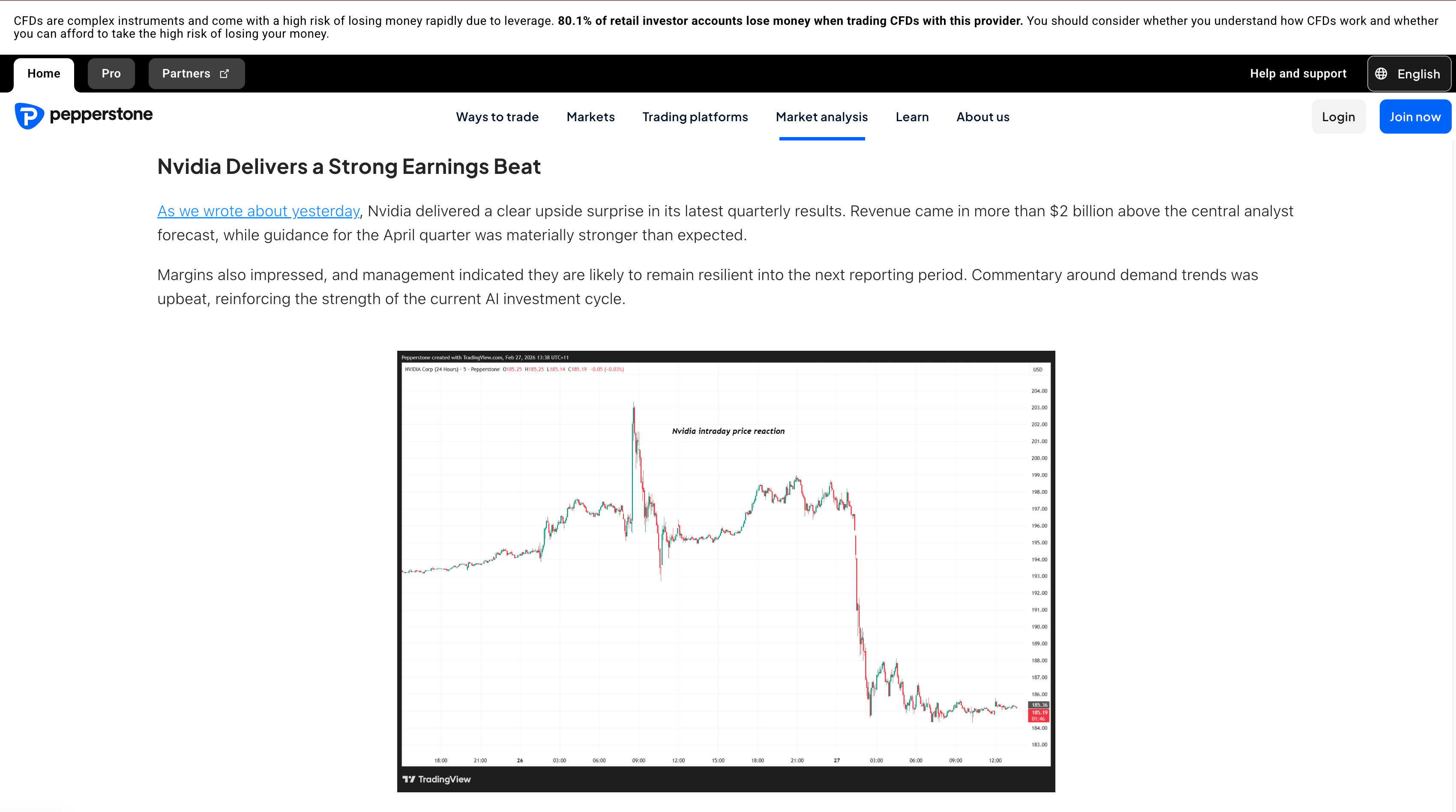
Where most brokers offer third-party research content, such as by Trading Central and Autochartist, Pepperstone delivers outstanding market research developed mostly in-house. I was especially impressed by its live podcast episodes that track major price trends and break down important trading setups. Tune in to find out about currently emerging breakout plays, corrections, and more. I found the content suitable for day traders and long-term swing traders.
Research is another strong point of Capital.com. The broker offers a variety of market content developed exclusively in-house and integrated directly into the Capital.com Web Trader platform for your convenience. You can access a news screener, economic calendar, market sentiment gauge, and even in-depth fundamental analyses directly from the trading station. The content suits news traders, who can use it to keep pace with the latest market-moving headlines, and swing traders, who can use the sentiment gauge to track major changes in buying and selling pressure. My one gripe with Capital.com’s research offering is that it does not include third-party materials for extra nuance and an alternative point of view.
Deposits & Withdrawals
Pepperstone vs Capital.com Deposit and Withdrawal Methods Comparison
Deposit and Withdrawal Rank | 5.0 | 4.9 |
Deposit Options | Cryptocurrencies, PayPal, Wire Transfer, Skrill, Neteller, Union Pay, ZotaPay, Visa, Mastercard, Apple Pay, Google Pay | PayPal, Wire Transfer, Skrill, Neteller, Credit Card, iDeal, Trustly, Debit Card, Apple Pay |
Withdrawal Options | Wire Transfer, Visa, Mastercard, PayPal, Apple Pay, Google Pay, Neteller, Skrill, Union Pay, Cryptocurrencies, ZotaPay | Wire Transfer, Debit Card, Credit Card, Apple Pay, PayPal, Skrill, Neteller, iDeal, Trustly |
Withdrawal Fee |
You can deposit to and withdraw from Pepperstone using bank wire, credit and debit cards, a variety of e-wallets, and cryptocurrencies. So there’s plenty of options. Transaction times are within the norm. I also learned that Pepperstone does not charge handling fees for deposits and withdrawals, though third-party processing fees may apply.
Capital.com accepts payments via bank wire, credit and debit cards, and various e-wallets. There is no handling fee on deposits or withdrawals, but third-party banking fees may apply. Such fees are not covered by Capital.com. I also learned that most deposits are processed within 48 hours on Capital.com’s end, while withdrawal requests may take 1 business day. This is pretty standard for the industry.
Please also note that I did not deposit real capital to either Pepperstone or Capital.com for my tests.
Account Types and Terms
Pepperstone vs Capital.com Account Types Comparison
Account Types and Terms | 4.9 | 4.0 |
# Base Currencies | 90 | 147 |
Islamic Account | ||
Demo Account | ||
Minimum Deposit | $0 | $20 |
You can get started with Pepperstone without having to meet any minimum deposit requirements. This applies to both the Standard and Razor accounts. One features commission-free trading and floating spreads from 1.0 pips, while the other offers raw spreads from 0.0 pips and round-trip commissions from $6 per contract (100,000 units). There are 10 available base currencies, including USD, EUR, GBP, JPY, and others. I also confirmed that Pepperstone offers swap-free trading via Islamic accounts.
Capital.com offers a single, one-size-fits-all trading account with zero commissions and floating spreads from 0.6 pips. You can use it to trade both CFD contracts and knock-out options. I also learned that it requires a $20 deposit, which is lower than the industry average of $100. The account can be activated with USD, EUR, GBP, AED, AUD, or CHF as a base currency. It took me less than 10 minutes to set up my account, including going through all the essential safety and KYC procedures. The one disadvantage to Capital.com is that swap-free trading via Islamic accounts is not available through its European entity.
Education
Pepperstone vs Capital.com Educational Content Comparison
Education Rank | 4.2 | 4.4 |
Videos | ||
Webinars |
Education is another area where Pepperstone performed well. The broker offers a variety of articles and videos for beginners and intermediate traders. I scored some of those and found them very practical. The focus is mostly on technical analysis (how to read price action, spot major patterns, interpret candlesticks, and more), though there is also content on risk management. I also appreciated Pepperstone’s content for being accessible. The highlight of my testing was the ‘Deciphering the Market Rhythm’ series podcast available from the broker’s YouTube channel.
The depth of Capital.com’s educational content is impressive. It features hundreds of videos, articles, courses, and e-books. I worked through several of Capital.com’s articles covering the most common trading fallacies and biases, such as the gambler’s fallacy and the confirmation bias. I found them very informative, yet easy to understand. Few other brokers match Capital.com in terms of educational content focused on trading psychology. You can also learn about technical analysis, fundamental analysis, and risk management. The other highlight of the offering was the Investmate app. I really liked that it allows you to test your knowledge even on the go.
Our Methodology
Since 2011, FX Empire has developed a detailed methodology for evaluating CFD brokers, involving over 250 variables across nine crucial categories. Our team of experts, with deep industry knowledge, conducts live testing and research by interacting with the brokers directly. We check regulations, open accounts, test spreads, account costs, platform functionality, instrument variety, customer support reliability, and the quality of research and educational content. This granular analysis helps us identify each broker’s strengths and weaknesses, keeping our comparisons current with market trends and ensuring our guides meet traders’ needs.
We strive to evaluate each broker objectively, considering how their offerings align with the diverse trading goals and preferences of our readers. Our focus is on providing a balanced overview of each broker’s strengths and weaknesses. This method ensures that our readers receive clear, insightful comparisons to aid in making well-informed trading decisions.
We employ a comprehensive rating system across nine key categories:
- Trust
- Fees
- Platforms and Tools
- Tradable Instruments
- Customer Support
- Research
- Deposits and Withdrawals
- Account Types and Terms
- Education
In each category, we conduct an in-depth analysis for both brokers, outlining features, advantages, and disadvantages and determining their suitability for different trader profiles. By blending insights from our extensive reviews with first-hand experiences and observations, we ensure each comparison is balanced, informative, and tailored to the trader’s unique needs. You can read more about our review process here.
Related Comparison Articles
About the Author
Having been a retail trader since 2013, Plamen has gained an in-depth understanding of the challenges that novice traders face today. His expertise is swing trading and day trading with a heavy emphasis on psychological and fundamental analysis. Plamen’s favourite trading instruments include FX majors and gold. He earned a Bachelor's degree in Economics and International Relations. Plamen's broad experience has equipped him with the expertise to recommend the best forex brokers.
Why you can trust FXEmpire
At FXEmpire, we strive to provide unbiased, thorough and accurate broker reviews by industry experts to help our users make smarter financial decisions.