



The precious metal gained more than 3% on Wednesday, November 4, marking its strongest daily performance since August 19, before extending its advance on Thursday to reach a two-week high.
Spot gold rose more than 1.3% around $4,115 an ounce on Thursday, November 5, its highest level since October 22. The rebound has been supported by a weaker US dollar and declining Treasury yields following the US midterm elections, which have encouraged investors to reassess the economic and monetary policy outlook.
However, the recovery comes against a challenging interest-rate backdrop. Markets are still pricing in an 82% probability of a Federal Reserve rate increase in December, potentially limiting gold’s upside. Friday’s US Nonfarm Payrolls report could help traders in determining whether the latest advance has further room to run.
Beyond the immediate reaction to US economic data, investors will also need to assess whether structural demand from central banks and gold-backed exchange-traded funds (ETFs) can provide longer-term support.
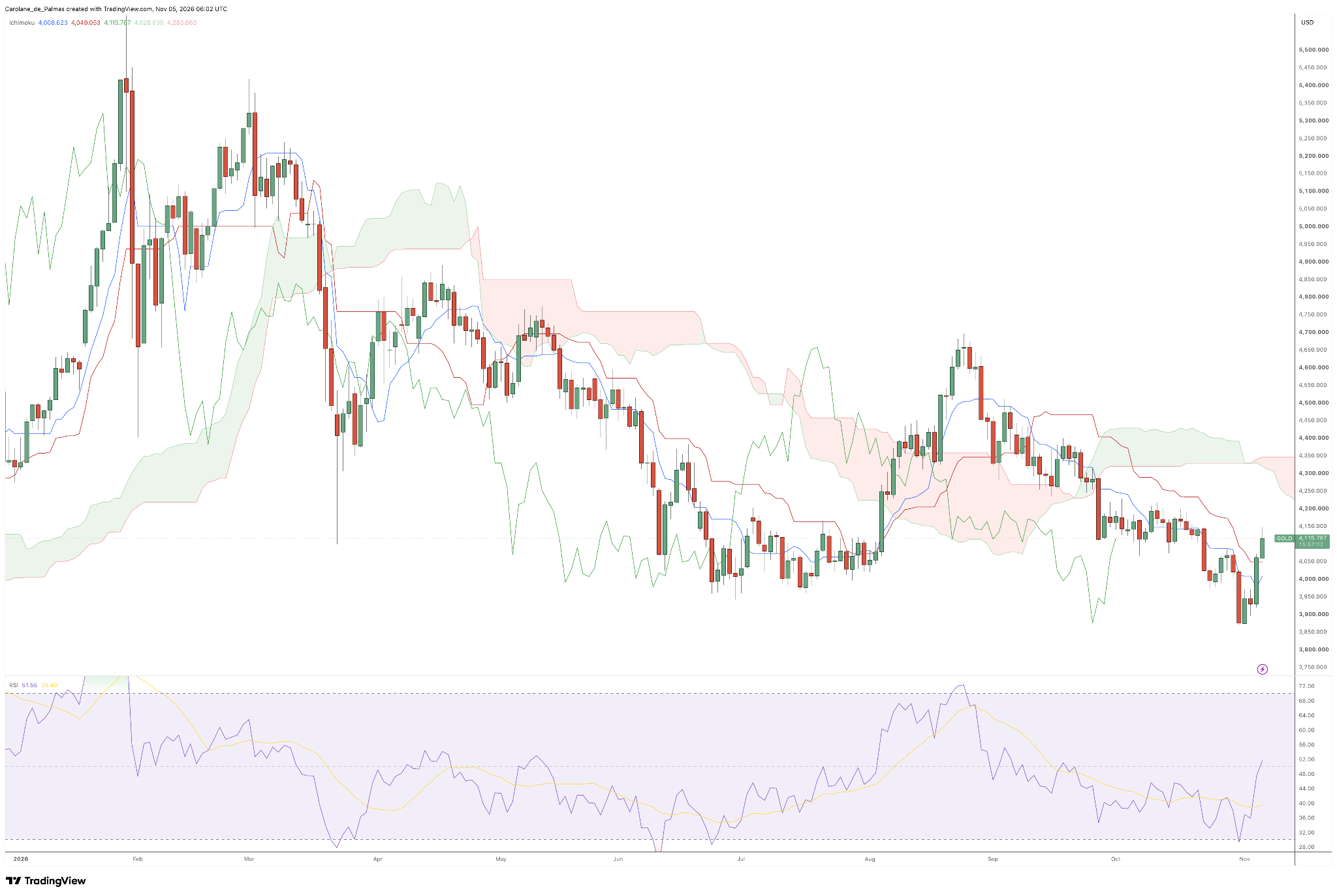
Friday’s US NFP Report Could Determine Gold’s Next Move
The US labour market will be the first major test for gold’s recovery this week. The October Nonfarm Payrolls report, scheduled for Friday, November 6, will provide investors with fresh information about employment conditions and help shape expectations for the Federal Reserve’s next monetary policy decisions.
The previous report offered mixed signals. US employers added just 29,000 jobs in September, while the unemployment rate remained at 4.2%. The relatively weak employment growth raised questions about the resilience of the labour market, although it did not immediately translate into expectations of lower interest rates.
For October, economists surveyed by FactSet expect approximately 55,000 additional jobs. This would represent an improvement from September, although employment growth would remain relatively modest.
The outcome could influence gold through its impact on the US dollar and Treasury yields.
A stronger-than-expected report, particularly if accompanied by firm wage growth and a lower unemployment rate, could reinforce expectations that the Federal Reserve could raise interest rates again in December. Higher yields would increase the opportunity cost of holding gold, which does not generate interest or dividends, potentially limiting demand for the precious metal.
Conversely, weaker employment figures could challenge expectations of further monetary tightening. If investors begin to anticipate a less restrictive Federal Reserve, Treasury yields and the dollar could come under renewed pressure, creating a more favourable environment for gold.
Nevertheless, the reaction may not be straightforward. The Federal Reserve is also monitoring inflation, meaning that wage growth and other inflation indicators could prove just as important as the headline payroll figure.
The current positioning of interest-rate markets leaves gold particularly sensitive to any surprise. According to CME Group’s FedWatch tool, traders were assigning an approximately 82% probability to a December rate increase as of Thursday. This suggests that a substantial degree of monetary tightening is already reflected in market pricing, although a particularly strong employment report could reinforce those expectations.
Gold Price Forecast
Every new Gold analysis as it publishes, today's technical signal and key levels, live price — on one page.
See all Gold forecasts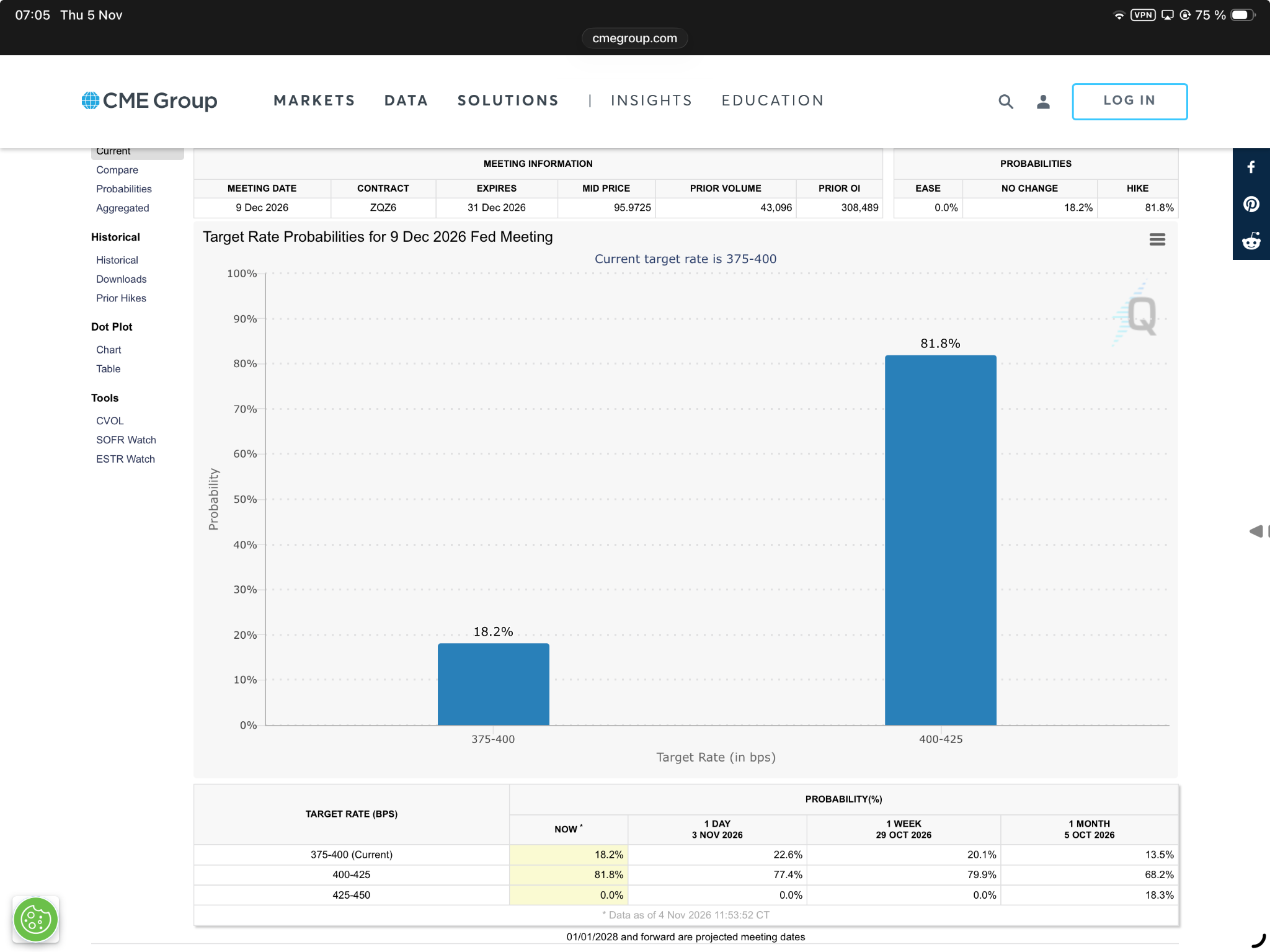
A Weaker Dollar and Falling Treasury Yields Support the Recovery
The latest advance in gold has also coincided with a deterioration in the US dollar.
Following the Democrats’ strong performance in the November 4 midterm elections, the greenback fell to a more than one-month low. Market participants evaluated the impact of a split Congress on President Trump’s economic priorities, noting potential limits on fiscal spending and legislative progress.
The weaker dollar has helped gold recover by making dollar-denominated bullion more affordable for investors using other currencies. At the same time, declining US Treasury yields have reduced the relative attractiveness of interest-bearing assets. The benchmark 10-year Treasury yield fell by six basis points overnight and stood at approximately 4.87% in early Asian trading on Thursday, according to Reuters.
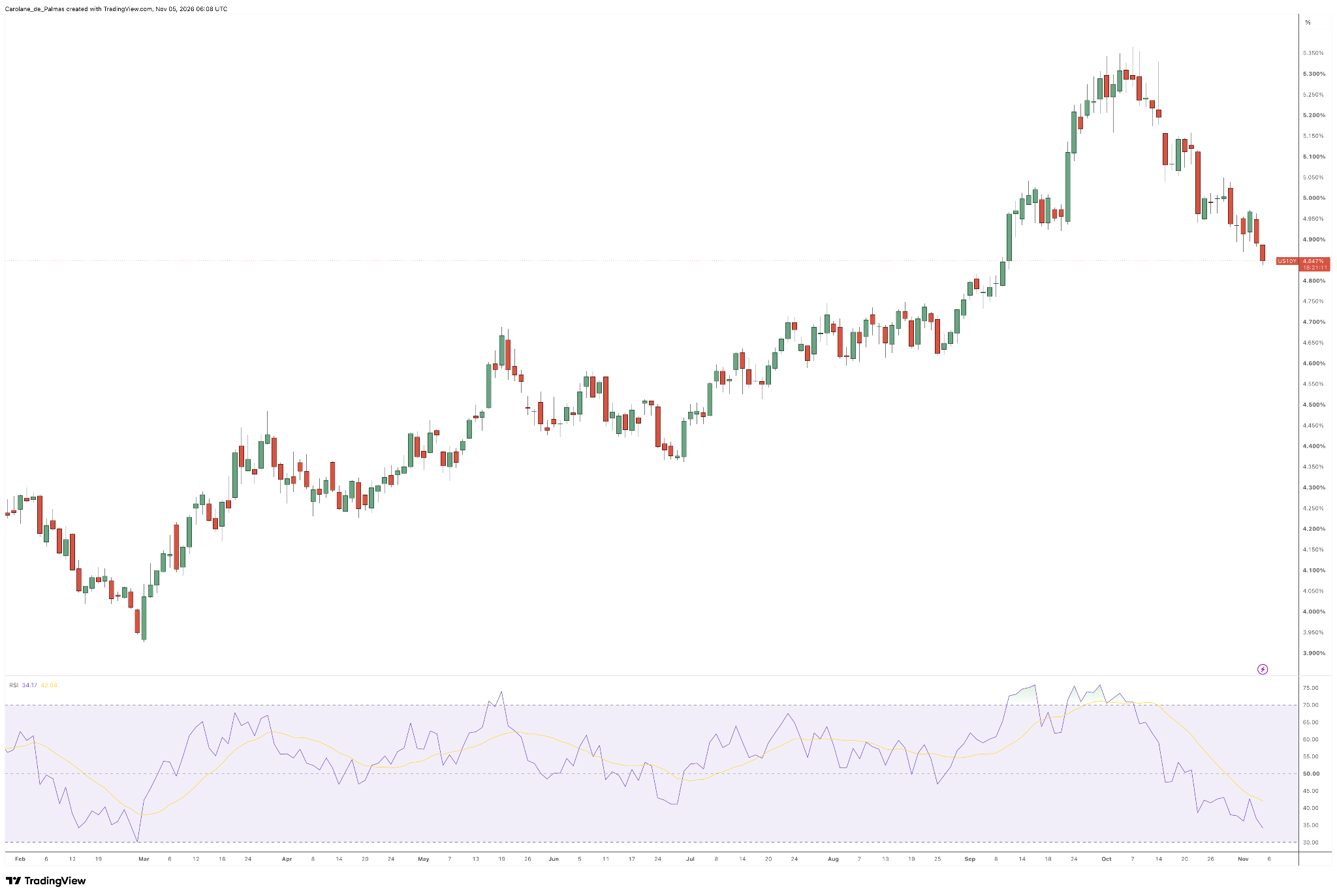
These two developments have provided an important source of support for gold after its October correction. However, their sustainability remains uncertain. Any renewed rise in Treasury yields, particularly if driven by stronger economic data or persistent inflation concerns, could reverse part of the recent recovery.
Geopolitical developments also remain relevant. The conflict involving the US, Israel and Iran, as well as uncertainty surrounding energy supplies and oil prices, could continue to influence demand for traditional safe-haven assets. At the same time, elevated energy costs risk reinforcing inflationary pressures and keeping interest rates higher for longer, creating conflicting implications for gold.
Central Bank Purchases Could Provide a Longer-term Source of Support
While employment data and monetary policy are likely to dominate gold’s relatively short-term direction, central bank demand remains an important structural factor.
According to the World Gold Council’s latest Gold Demand Trends report, published on November 3, central banks and other official institutions purchased a net 321 tonnes of gold during the third quarter of 2026. This represented a 42% increase compared with the same period last year and the strongest quarterly accumulation since the final quarter of 2024.
The acceleration also helped offset a relatively subdued start to the year. Central bank purchases reached 675 tonnes during the first nine months of 2026, 6% above the corresponding period in 2025.
China and Poland were among the largest disclosed buyers during the third quarter. Their continued accumulation reflects a broader effort among monetary authorities to diversify reserve portfolios and reduce exposure to traditional financial assets.
This demand is particularly relevant to gold’s longer-term outlook because central banks are generally less focused on short-term price fluctuations than speculative investors. Their purchasing decisions are often driven by reserve diversification, risk management and geopolitical considerations.
However, central bank demand should not be interpreted as an automatic price floor. Purchasing activity can fluctuate, particularly when gold prices remain elevated, and other market participants can exert considerable selling pressure.
Investment demand has also provided additional support. The World Gold Council reported that physically backed gold ETFs attracted 211 tonnes of inflows in the third quarter, bringing global holdings to a record 4,256 tonnes. Quarterly inflows reached approximately $31 billion.
The contrast with consumer demand is notable. Jewellery purchases declined by 17% year-on-year to 313 tonnes, while demand for bars and coins fell 19% to 268 tonnes. High prices have therefore discouraged some individual buyers, even as institutional investors and central banks have maintained their interest.
This divergence suggests that gold’s longer-term support increasingly depends on institutional investment and official-sector demand rather than broad-based consumer buying.
Gold Outlook: Can Prices Extend Their Recovery Towards $4,200?
Reclaiming the $4,000 threshold is an important development after gold briefly dropped to $3,870 on October 30, its lowest level since October 2025. However, the recovery will need to hold above this psychological level to strengthen the bullish outlook.
The $4,200 area could represent an initial resistance zone for traders, followed by the $4,400 zone if buying momentum continues. Further upside could bring Citi’s near-term forecast into focus. The bank has established a price target of $4,500 an ounce over a three-month horizon. On the downside, a renewed break below $4,000 would weaken the recovery and expose gold to another test of recent lows around $3,870.
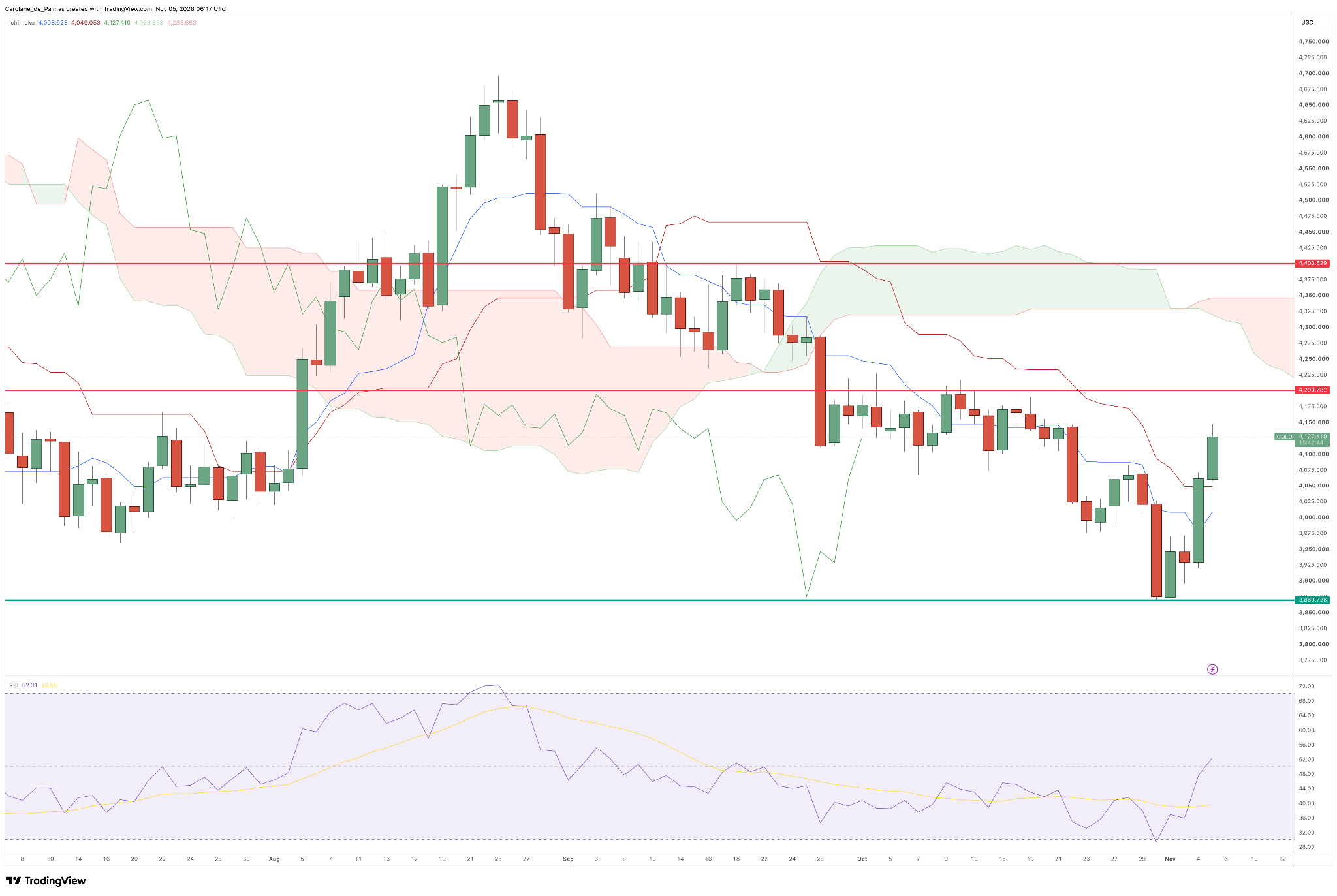
Gold’s Next Move Will Depend on Both Monetary Policy and Institutional Demand
Gold’s rebound above $4,000 has improved its short-term outlook, but it is too early to conclude that the October correction has definitively ended.
Friday’s US employment report could provide the next catalyst, particularly as markets are already pricing in a high probability of another Federal Reserve rate increase in December. The dollar and Treasury yields will remain essential indicators of whether the latest recovery can be sustained.
Beyond the immediate monetary policy outlook, continued central bank accumulation and renewed ETF inflows provide a more structural source of demand. These factors could help cushion future corrections, even if higher interest rates and elevated bond yields continue to challenge gold.
Sources: CME Group, The Wall Street Journal, World Gold Council, Reuters, Yahoo Finance, US Bureau of Labor Statistics