


WTI Crude Oil
WTI crude oil’s fundamental backdrop on Thursday is more interesting beneath the headline crude inventory number. The EIA’s November 4 report showed commercial crude stocks falling 0.9 million barrels to 409.8 million in the week ending October 30. More strikingly, distillate inventories dropped 3.6 million barrels and stood 13% below their five-year seasonal average. Gasoline stocks declined only 200,000 barrels. This shows very uneven tightness rather than an equally strong balance across every fuel.
Refinery Activity
Refinery activity helps explain why product figures deserve some attention. Crude imports reached 16.725 million barrels per day, up 199,000 barrels per day, while utilization rose to 94.5%. Distillate stocks finished at 99.3 million barrels, making my interpretation that strong processing hasn’t removed the pressure on this part of the barrel.
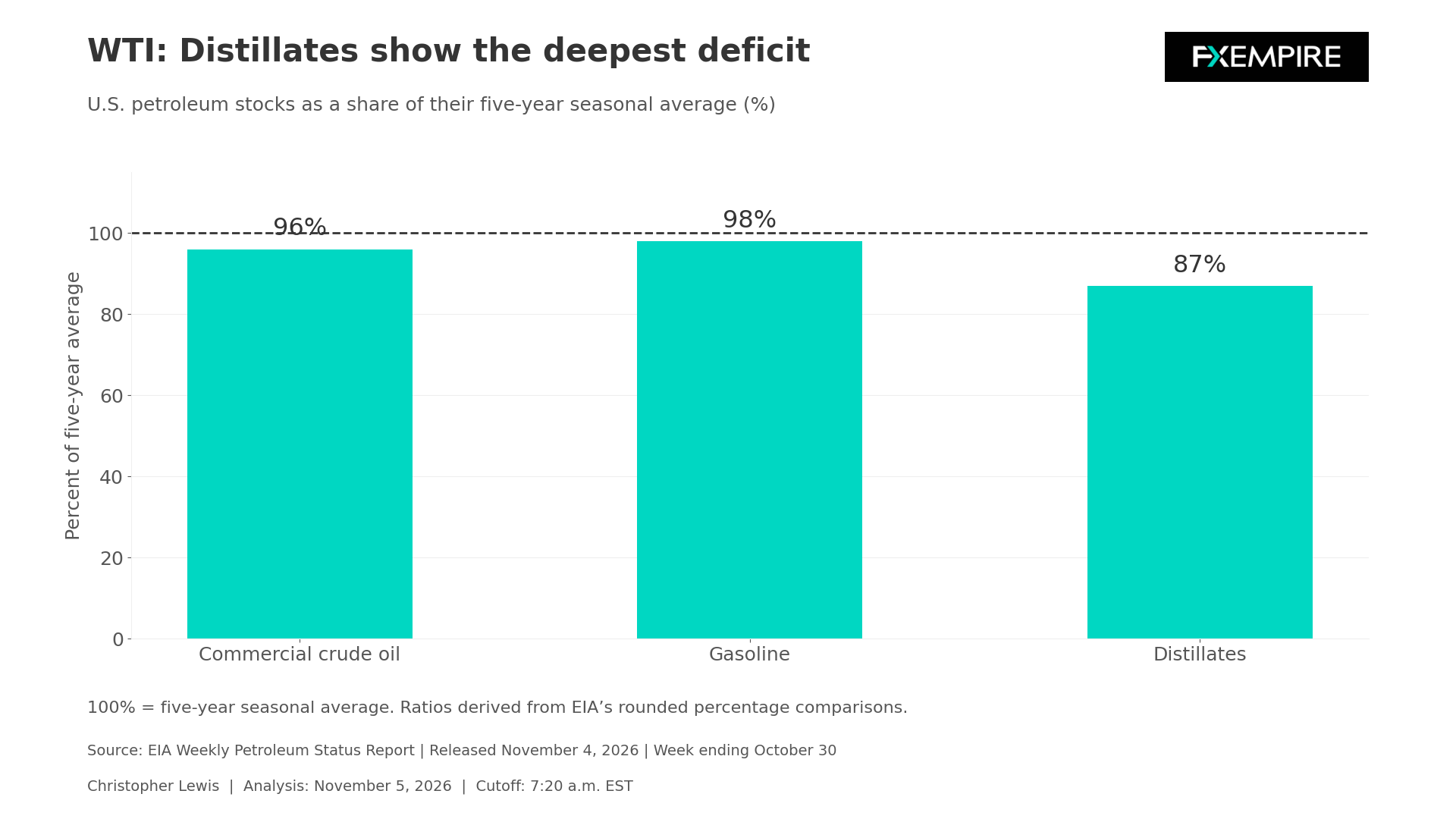
There are limits to the bullish interpretation, though. Weekly domestic crude production was estimated at 14.003 million barrels per day, while exports fell to 3.675 million from 4.855 million. The export decline means the inventory draw cannot simply be described as a surge in buying from overseas. Demand still needs to be taken into account very carefully. Four-week distillate product supply was 8.7% above a year earlier, while gasoline was 0.4% lower. Product supplied is a balance-sheet demand proxy, so these figures should not be presented as a direct survey of purchases by end-users.
For the next couple of sessions, the useful question will be whether refinery runs begin rebuilding products or whether inventories continue to erode. A sustained rebuild would weaken the argument for a scarcity premium.
Technical Analysis

The biggest part of this argument is that we are seeing a bit of a reaction to the elections in the United States. This does not put the war or hostilities with Iran on hold, and my suspicion is that value hunters are going to start coming into the market. That being said, with the nonfarm payroll announcement on Friday, it’s likely that this market may just levitate in the short term.
Brent Oil Price Forecast
Every new Brent Oil analysis as it publishes, today's technical signal and key levels, live price — on one page.
See all Brent Oil forecastsBrent
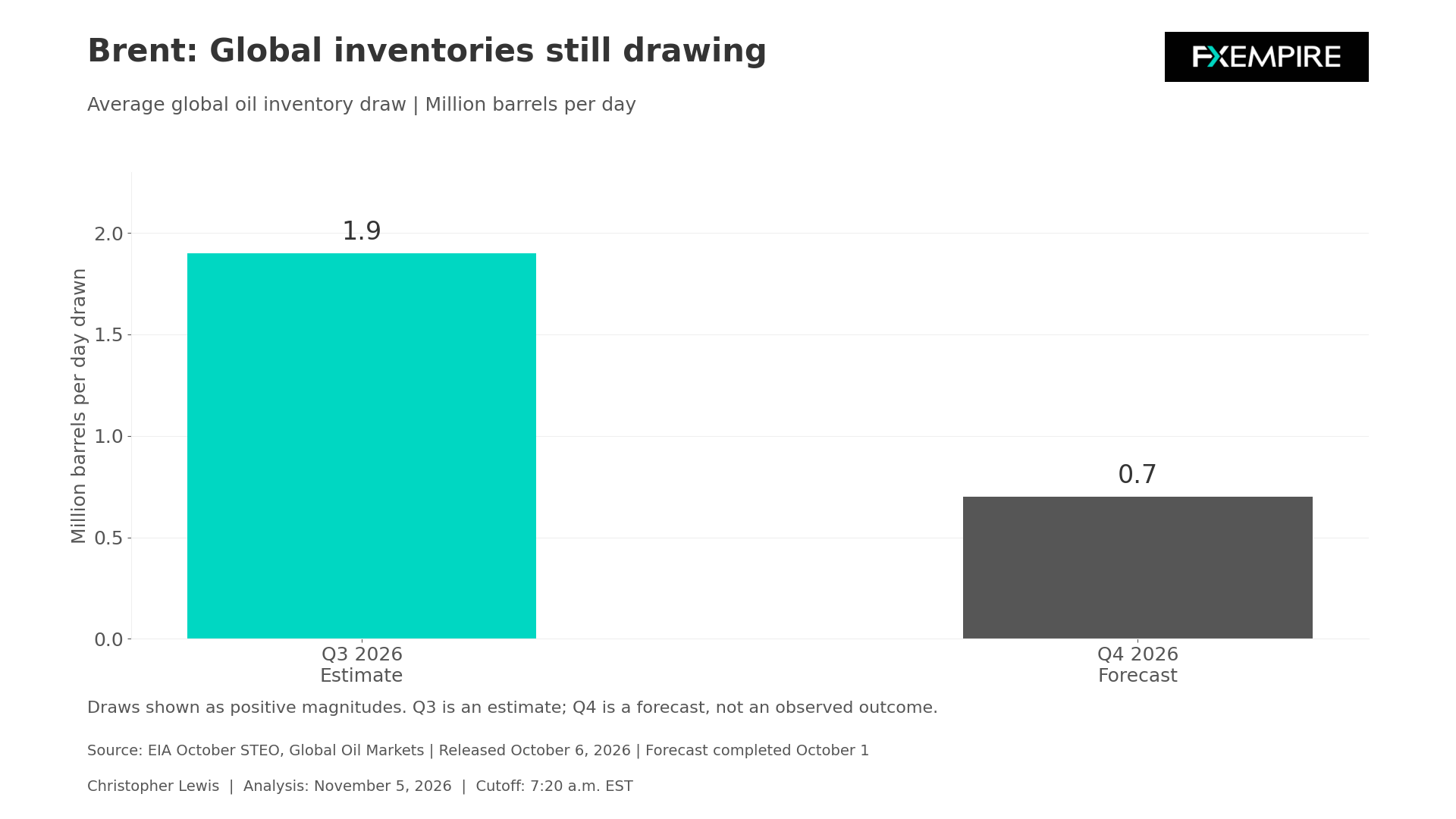
Brent has an international backdrop that remains tied to the availability and delivery of export barrels. The latest verified EIA monthly outlook is dated October 6 and was completed October 1. It estimates inventory draws of 1.9 million barrels per day in the third quarter and forecasts 700,000 barrels per day in the fourth. The distinction matters because an inventory draw can continue even as supply disruptions ease.
Middle Eastern Shut-ins
EIA estimated Middle Eastern production shut-ins at 4.8 million barrels per day in September, compared with 5.8 million in August, and assumed 4.5 million in the fourth quarter. Its outlook therefore combines a partial supply recovery with continued constraints. The next STEO is scheduled for November 10. The pace of normalization matters more than a simple distinction between disruption and recovery.
Additional export availability can help reduce the premium buyers pay for cargo. However, rebuilding depleted inventories also absorbs barrels. The U.S. products balance adds another consideration for international refiners. Distillate tightness can encourage processors to seek suitable crude grades, but it does not mean that every barrel benefits equally. Refinery configuration, freight, product yields, and delivery time all influence the value of a cargo.
Brent should therefore be assessed alongside physical products markets rather than through U.S. crude stock figures alone. A more convincing bearish fundamental case would involve sustained export recovery, dependable transportation, and evidence that inventories are rebuilding. A renewed interruption would challenge that case, especially if buyers have little flexibility over delivery dates, as transportation still remains a major problem.
Technical Outlook

The technical analysis for Brent is very much like WTI, as you would expect, as we are bouncing from the 200-day EMA. The question at this point in time is whether the elections this week in the United States truly change anything. I suspect that international investors may be a bit surprised to learn they won’t. The idea of the war suddenly ending seems to be a bit of a fairy tale, and the market may have gotten ahead of its skis. I still look for short-term dips to buy, but recognize that the nonfarm payroll announcement coming out on Friday could keep the market somewhat quiet between now and then.