



Global markets are entering a new stage of uncertainty with trade tensions resurfacing under US President Donald Trump and geopolitical tensions in the Middle East on the rise. Trade tariffs, court decisions and oil shocks are recalibrating inflation, growth and investment flows. This is leading to extreme volatility in stock, bond and currency markets as investors reassess risks in dynamic macro environment.
US Tariffs Return as Policy Uncertainty Builds
The recent developments have demonstrated that US trade policy is highly unpredictable. The Supreme Court invalidated the very broad tariffs enacted under IEEPA and the administration was forced to reconsider how it approached the issue. At the same time, US imposed 10% tariffs for 150 days with an option to increase it to 15% as new steps are considered. This provides complex background in which policy is being tightened and legally challenged.
This situation is complicated by new Section 301 investigations against 60 countries. China retaliated with its own investigations. This is a warning of possible escalation towards the planned meeting between US and Chinese leadership. Moreover federal judge ordered more than $130 billion of tariff refunds which triggered lawsuits from more than 2000 companies. That puts more pressure on policy and fiscal stability.
EU–US Trade Deal Progress Faces Structural Challenges
The European Union has made a step forward by proceeding with the law to implement its side of trade deal with US. This shows both sides are attempting to take the agreement forward. Lawmakers passed the move by clear margins, but they also added some protections since there are doubts about whether the US will fully stick to agreement. So despite the progress, the deal remains uncertain.
There are still strong concerns in the EU. Many lawmakers believe that the agreement is imbalanced. The EU is expected to lower its tariffs and the US is looking to keep duties at around 15%. To defend its industries, the EU has added safeguards such as suspension clauses and conditions to the reduction of tariffs. With exports to US hitting record EUR 555 billion in 2025, the stakes are very high and any problems in the deal could have big impact on global trade.
Brent Oil Price Forecast
Every new Brent Oil analysis as it publishes, today's technical signal and key levels, live price — on one page.
See all Brent Oil forecastsUS–Iran Tensions Push Oil Higher and Raise Inflation Risks
The situation between the US and Iran remains tense and there is still no clear way out. Recent developments indicate that both sides are holding firm and deadlines and warnings have not calmed markets. Oil prices are still booming as there are still high supply risks from disruptions around Strait of Hormuz. Therefore, oil prices are likely to continue higher if conflict escalates further.
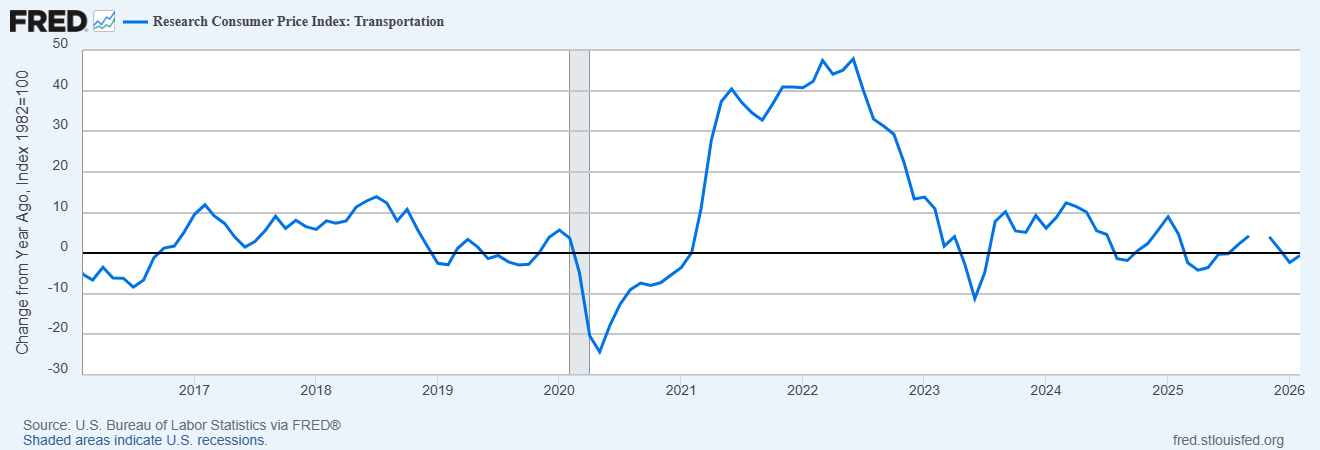
This spike in energy prices is already contributing to the inflation. Fuel costs have risen dramatically and this is beginning to affect the cost of transportation, food and general production costs. The chart below shows that the consumer price index for transportation reached a bottom during the COVID-19 crisis then surged higher.
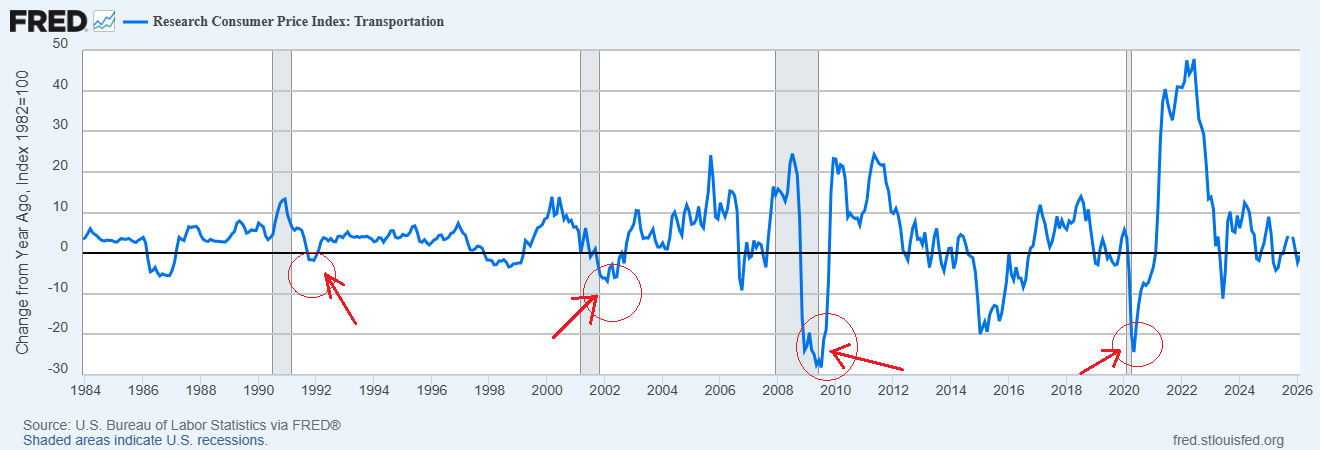
A similar situation was observed during the 1990-1991 recession, 2001 recession and 2008-2009 recession when the index dropped lower and surged higher. This might be the same situation as unresolved crises are leading to global recession.
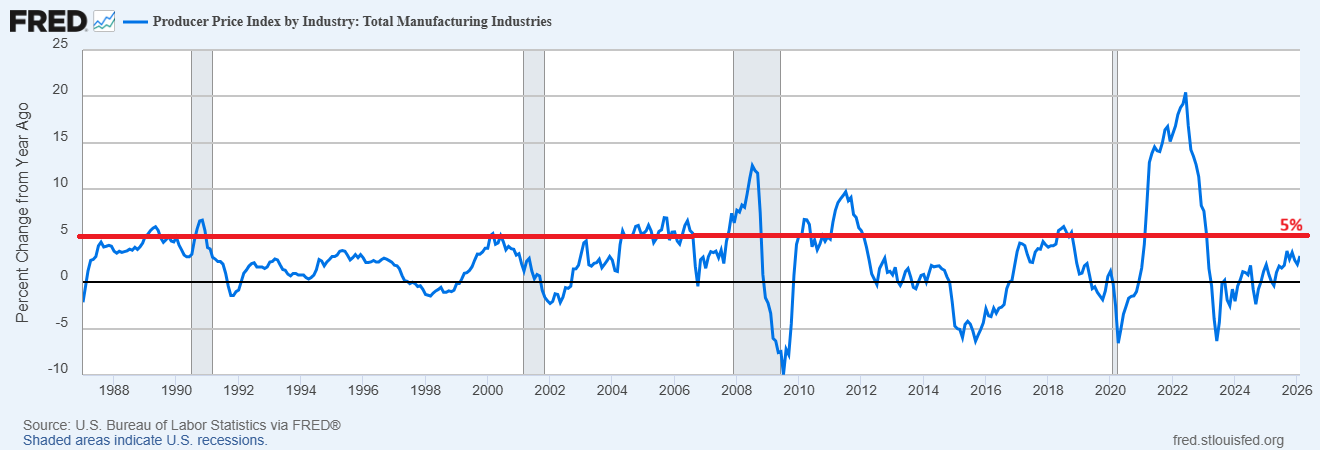
The same situation is observed using the producer price index by industry, which remains below 5%, which is a recessionary level.
At the same time, the financial markets are reacting rapidly. Bond yields have trended higher and expectations for rate cuts have been pushed down. According to the Fed Watch tool, there are no rate cuts expected in 2026.

This puts central banks in a difficult situation. Inflation is going up because of energy shocks, but economic growth is under pressure as well. Equity markets are already feeling the pinch with major indices in decline as investors factor in tighter conditions and slower growth.
Markets are now confronted with the threat of inflation and recession at the same time. This combination is making all asset classes more volatile and making policy decisions a lot more difficult.
Global Markets Outlook: Equities, Dollar and Yields Under Pressure
S&P 500 and Euro Stoxx Under Pressure from Tariffs and Rising Costs
S&P 500 Outlook – Downside Risks Build
The US stock market is showing signs of stress as trade uncertainty and rising costs start to weigh on the earnings expectations. Tariffs raise the cost of inputs and cause a decrease in global demand which has direct effect on corporate margins. At the same time, rising energy prices are adding inflationary pressure that cuts the capacity of central banks to ease policy.
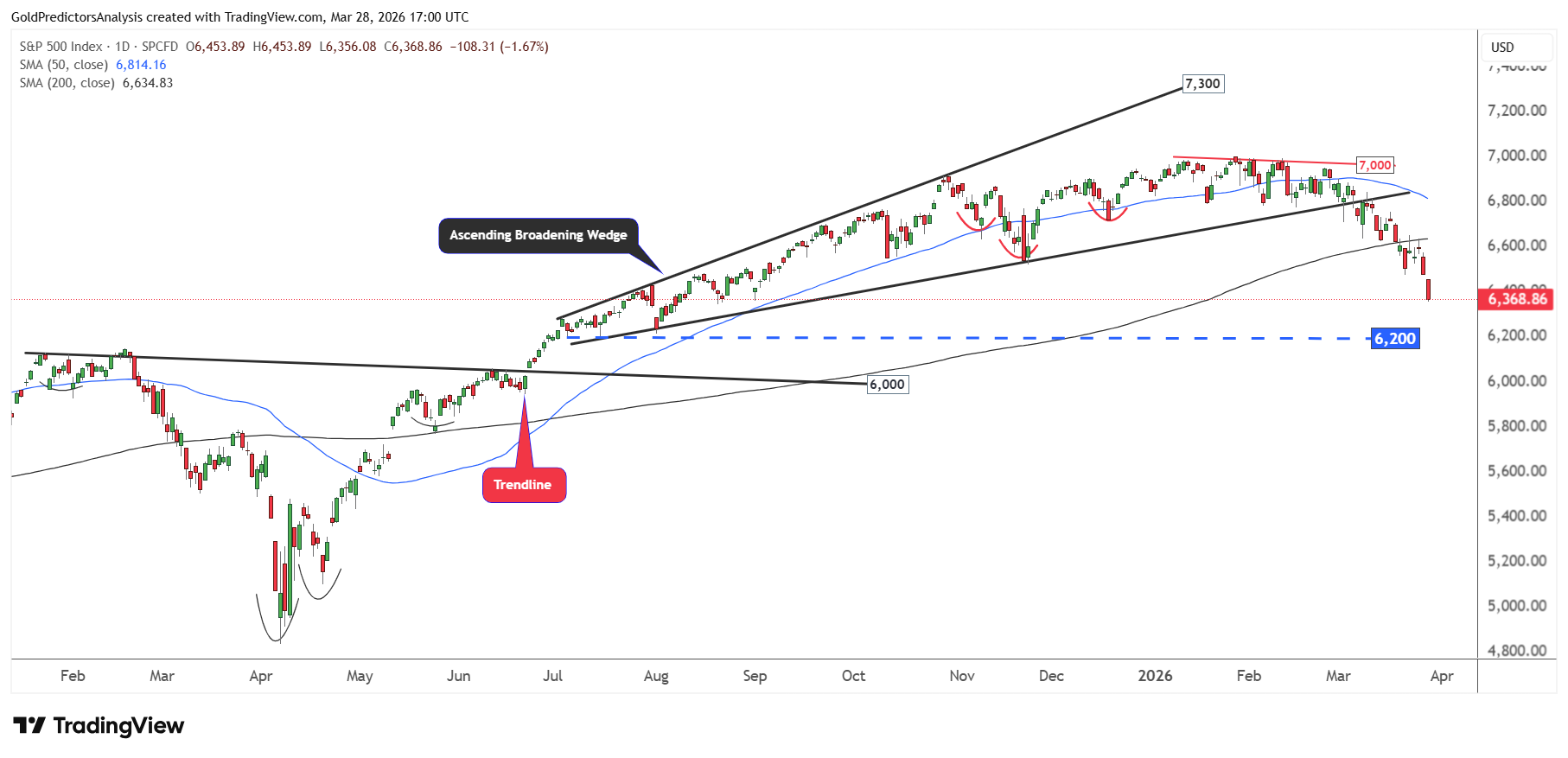
The chart below shows that the S&P 500 (SPX) has broken the ascending broadening wedge pattern which has a minimum target of 6,200. The index has also broken the 200-day SMA and looks for bearish pressure. The negative weekly close further indicates move downside next week. A recovery back to 6,450 will be considered a selling opportunity to target 6,200.
Euro Stoxx 50 Outlook – Breakdown Signals Further Weakness
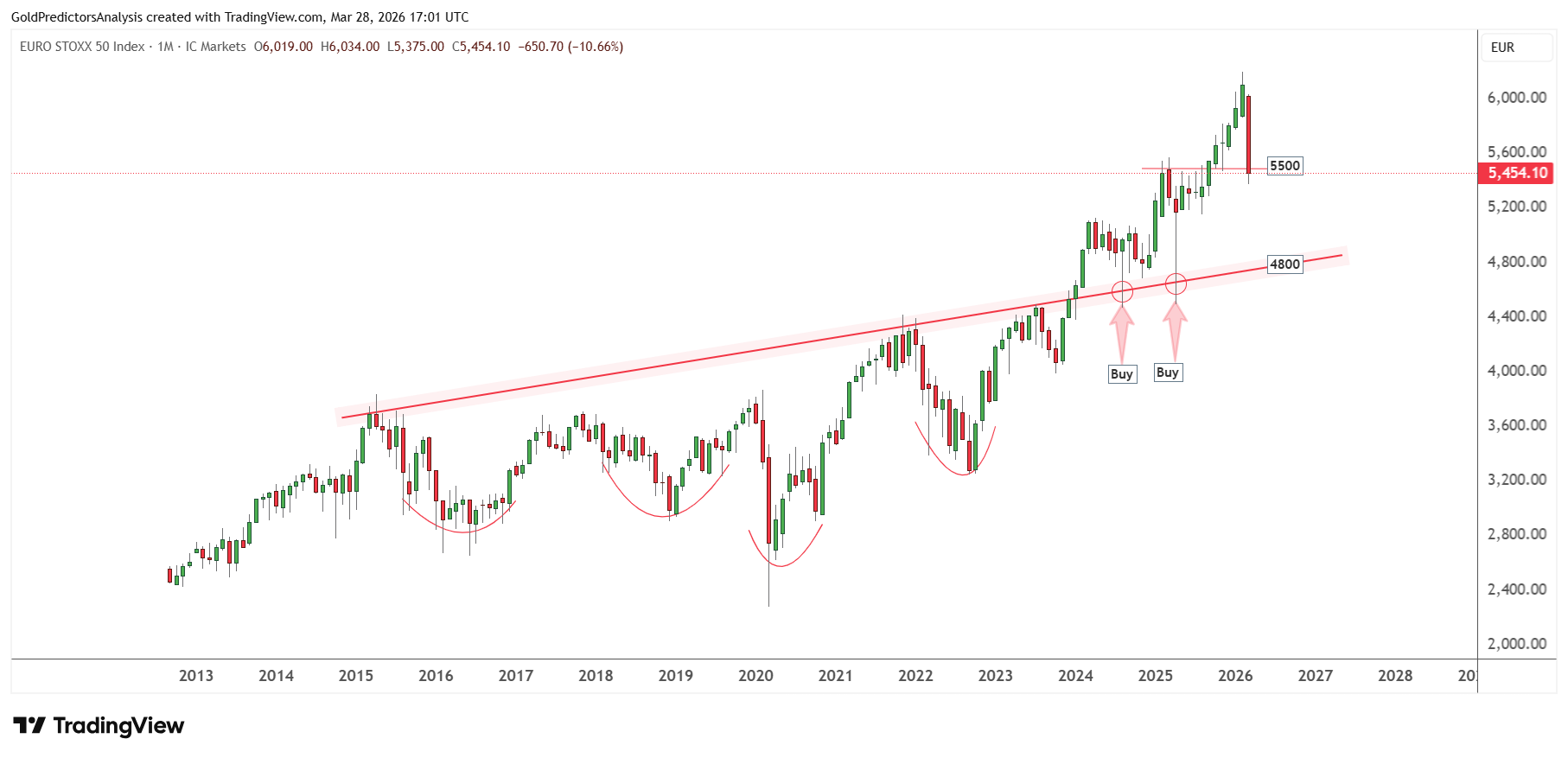
In Europe, Euro Stoxx 50 is experiencing the same challenge. While there is some support from progress on the US-EU trade deal, there are concerns about uneven terms and possible escalation of tariffs. Moreover, the export driven economies in Europe are sensitive to changes in US trade policy. This means that equity markets remain under pressure in the short term.
The chart below shows that the index has surged higher after breaking neckline of inverted head and shoulders at the 4,500 zone. However, the prospect of US-Iran war and tariff uncertainty has broken the short term support of 5,500. The index now looks for a drop to the neckline line support at $4,800 which is a significant area for buyers.
US Dollar Strength Builds as EUR/USD Faces Downside Risks
US Dollar Index Outlook – Key Resistance at 100.50
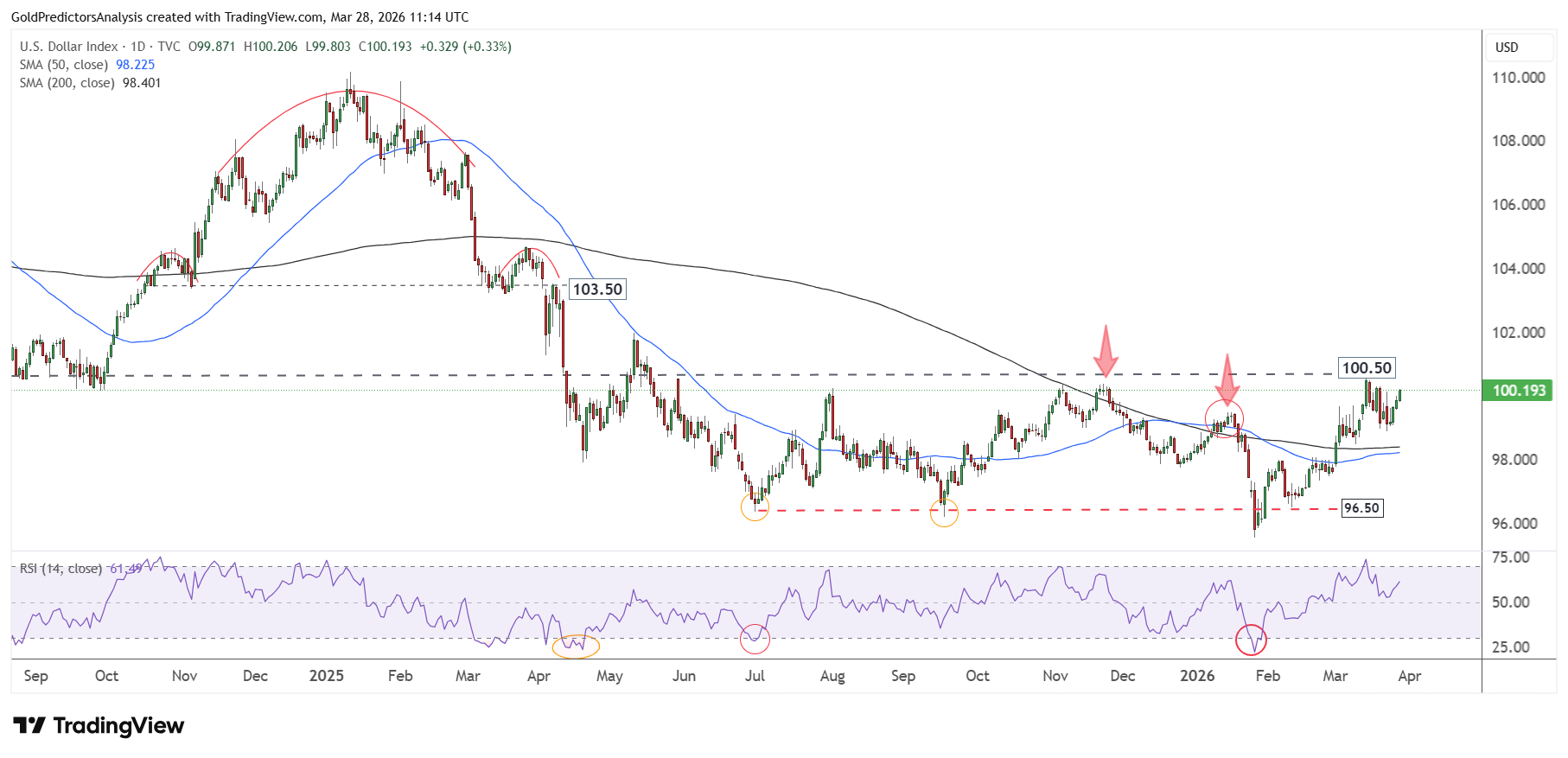
The US Dollar Index is benefiting from safe haven demand and rising yield expectations. The trade tensions and geopolitical risks are positive for the dollar, as investors seek stability. At the same time, inflation pressures from higher oil prices make rate cuts less likely, which also supports the dollar.
The chart below shows that the US dollar index continues to build positive energy below 100.50. A break above 100.50 will fuel a quick move to 102 level which will likely put pressure on EUR/USD, Gold (XAU), Silver (XAG) and other commodities. On the other hand, a break below 96.50 will signal a quick drop to the 90 level that will confirm a bottom in gold and initiate a strong surge towards $6,500.
EUR/USD Outlook – Downside Risk Toward 1.1260
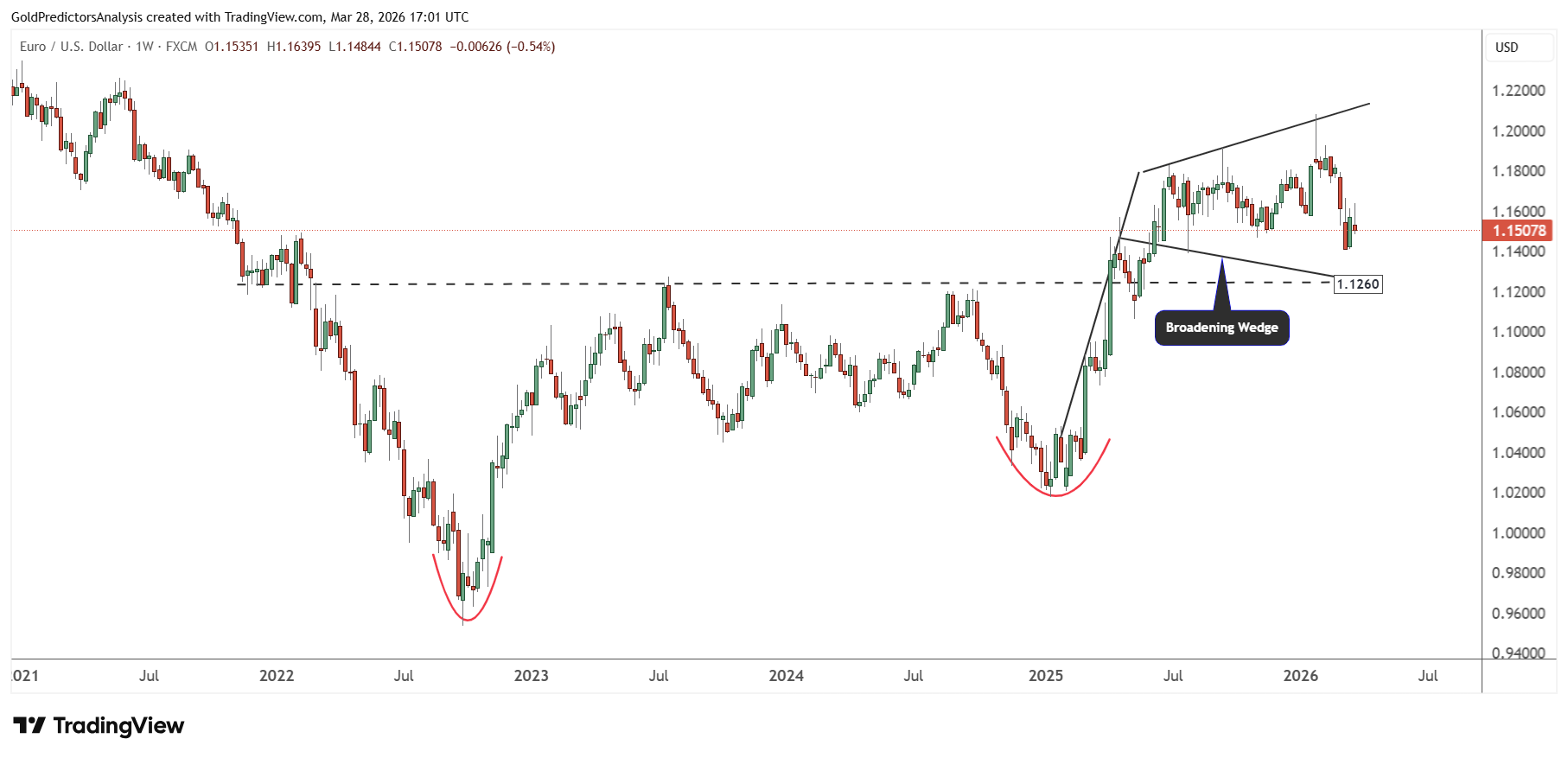
This buildup of positive energy in US dollar index last week is putting pressure on EUR/USD. While the EU-US trade deal provides some support to the euro, concerns over the structure of the trade agreement as well as continued tariff risks limit upside potential. The pair continues to be sensitive to both trade developments and interest rate expectations with downside risks dominating in the current environment.
The chart below shows that the EURUSD is trading within the broadening wedge pattern and a break below 1.14 will take the pair to 1.1260. Traders will continue to sell the pair to target the 1.1260 level.
Rising US Yields Support USD/CHF as Inflation Risks Persist
US 10-Year Yield – Support at 4.30% Points to 4.62%
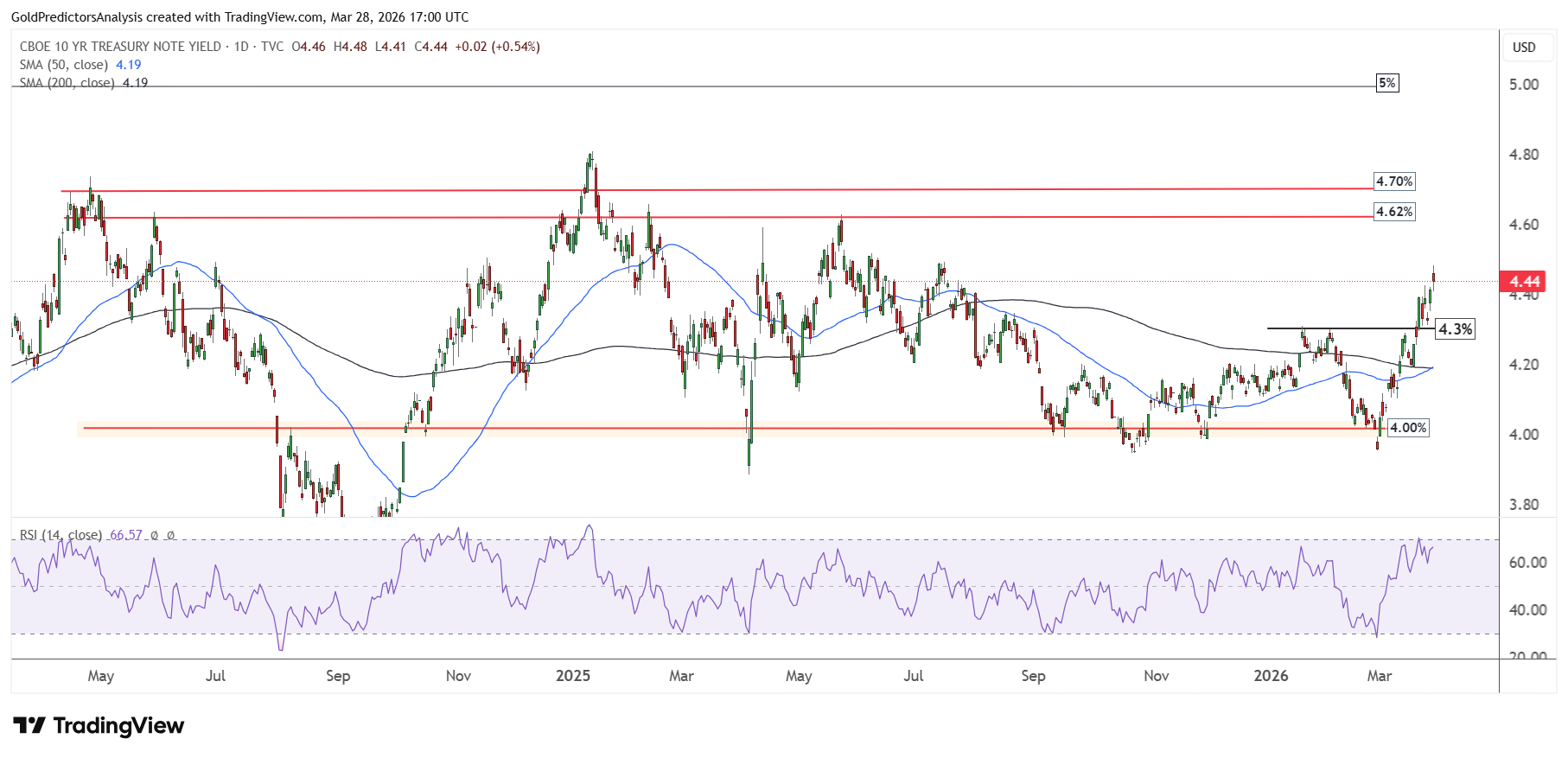
The US10Y is trading higher as markets are pricing in persistent inflation risks. Higher oil prices and cost pressure from tariffs are driving inflation expectations higher. This lowers the odds of rate cuts and supports higher yields throughout the curve.
The daily chart for 10-year US Treasury yields shows support at 4.30% and indicates a continued move upside towards 4.62%.
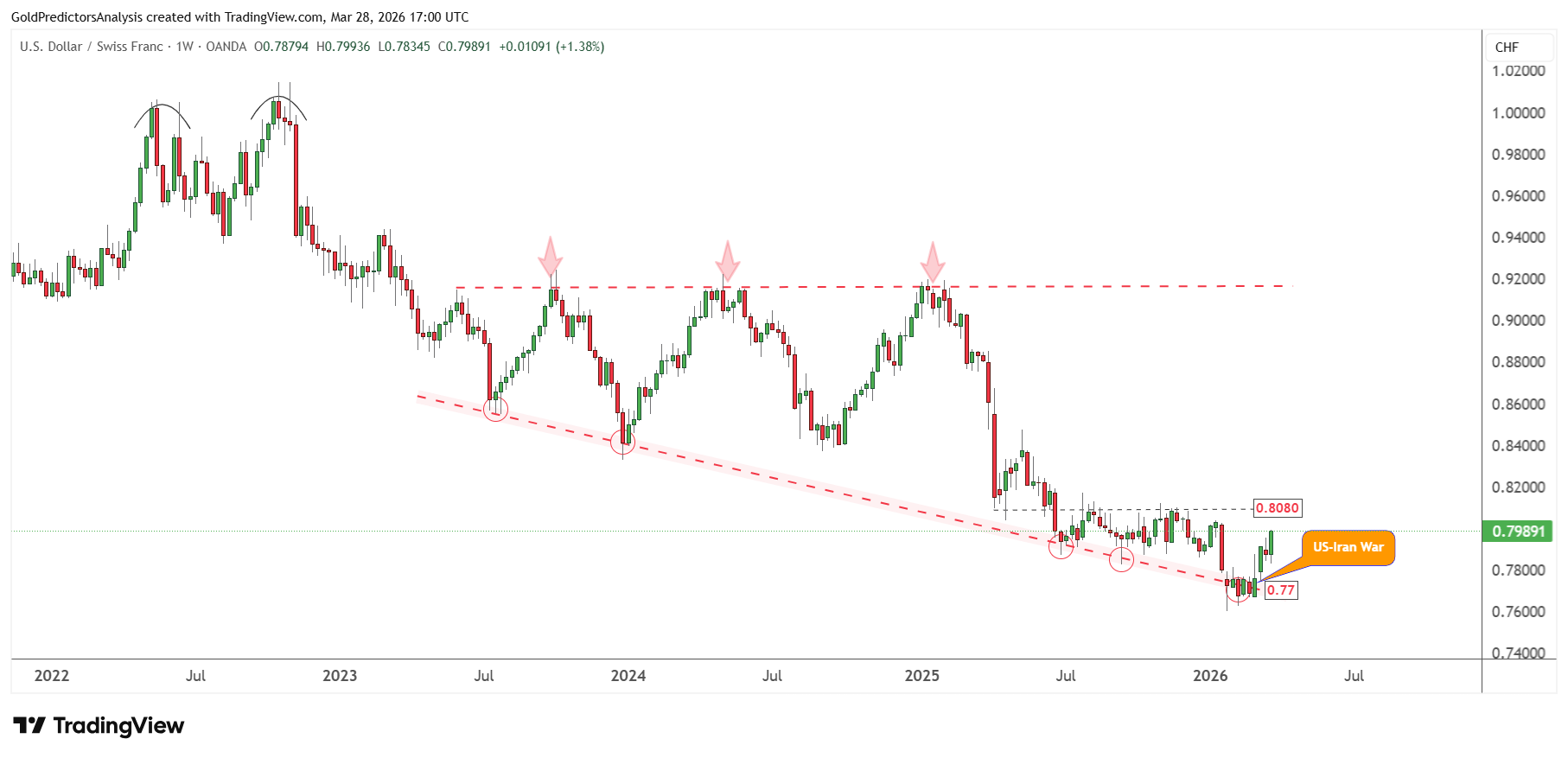
USD/CHF Outlook – Dollar Strength Keeps Upside Intact
Meanwhile, USD/CHF is reflecting the balance between the safe-haven flows and dollar strength. The Swiss franc is usually a winner in such times of uncertainty, but the strength of the US dollar is currently dominant. This gives a mixed but upward slant to the pair as long as yields and the dollar are held up.
The chart below shows that the USDCHF pair is going higher towards 0.8080. Traders will continue to buy the pair to target 0.8080 in the short term.
Conclusion – Trade and Geopolitics Drive Market Volatility
The combination of Trump tariffs and rising geopolitical tensions is creating complex and volatile macro environment. Trade policy uncertainty is depressing equities. On the other hand, inflationary pressures from energy markets are stimulating yields and the dollar. This divergence is driving the behaviour of the markets in the major asset classes.
Overall, markets will be sensitive to trade negotiations and the developments in the Middle East. Any resolution in trade tensions or geopolitical risks could quickly alter sentiment. Until then, the current environment is conducive to volatility with yields and the dollar as principal movers among global markets.