


The fundamental picture for silver combines improving industrial output with monetary conditions that remain demanding for non-interest-bearing assets. The latest Federal Reserve industrial production release, published on October 16, showed manufacturing output rising 0.3% in September after falling 0.2% in August. Manufacturing was 1.1% above its year-earlier level.
Modest Industrial Expansion
This offers evidence of modest industrial expansion, but it does not necessarily demonstrate a sudden acceleration in physical silver consumption. Silver output increased by at least 1% in electrical equipment, appliances, and components, and in primary metals and machinery. Motor vehicles and parts declined 3%. Manufacturing capacity utilization was 75.9%, below its long-run average. These figures describe a very uneven industrial environment rather than a broad capacity squeeze.
For silver, the distinction between production and metal demand is essential to keep in the back of your mind. Increased output in an industry that uses silver can improve the demand backdrop, but the relationship also depends on the amount of metal used per unit, manufacturers’ inventories, and substitution. A production index cannot be converted into ounces of consumption without further evidence.
Manufacturing Index
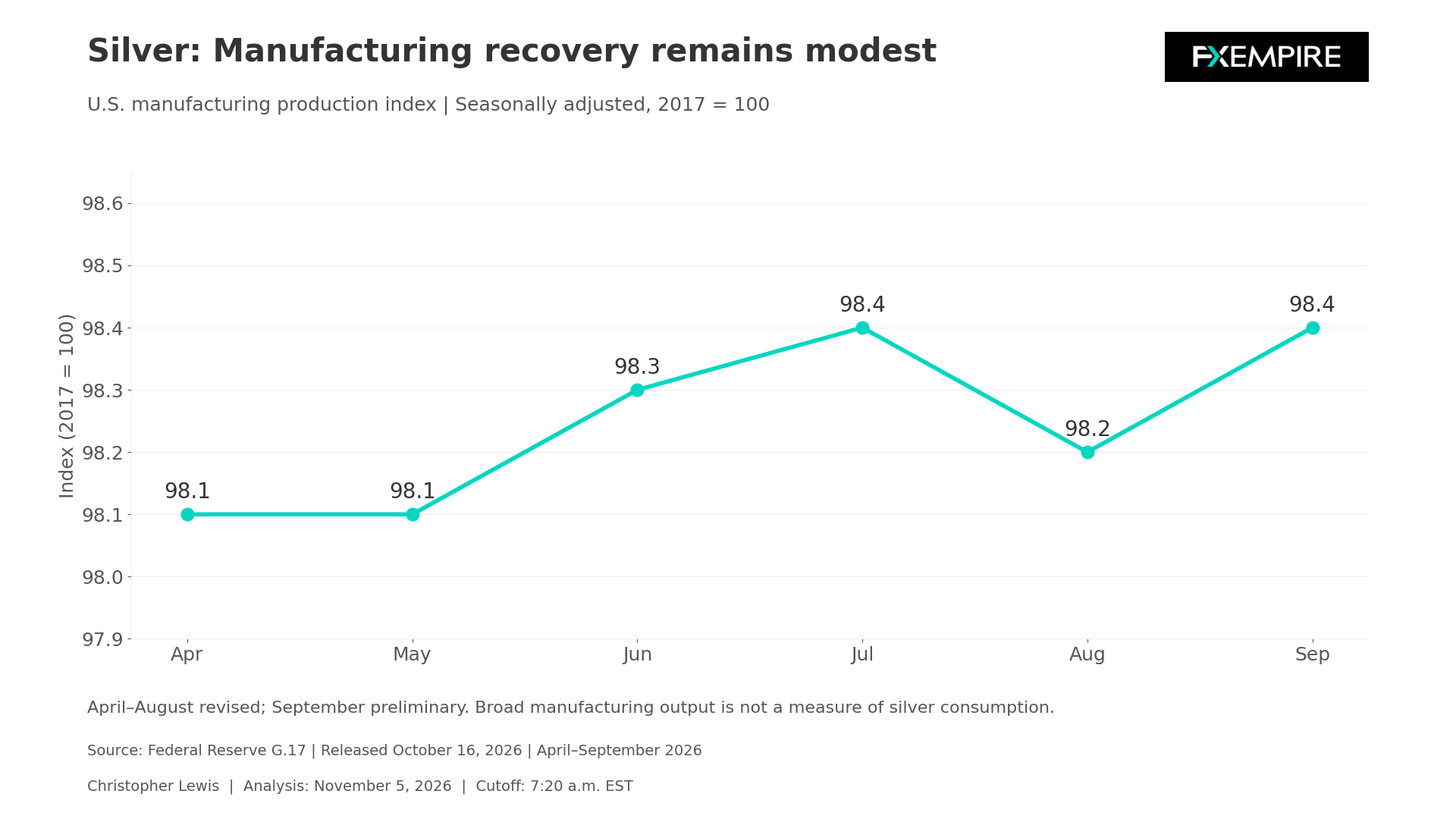
The accompanying chart makes the scale of the improvement clear. The manufacturing index moved from 98.1 in April to 98.4 in September, using 2017 as equal to 100. It includes every monthly observation in that interval. The pattern supports a measured recovery narrative. It does not justify the suggestion of an industrial boom.
Monetary conditions provide a separate influence. The Federal Reserve held its policy rate in the 3.75% to 4% range on October 28. The latest reported 10-year real Treasury yield was 2.65% for November 3. For investors comparing bullion with interest-bearing assets, this is a big hurdle.
Silver Price Forecast
Every new Silver analysis as it publishes, today's technical signal and key levels, live price — on one page.
See all Silver forecastsMy interpretation is that silver needs to be assessed through both channels. Stronger manufacturing can support expectations for fabrication demand. Higher real yields can simultaneously reduce the appeal of investment holdings. When those forces point in opposite directions, industrial optimism alone may be insufficient to sustain rising prices. Equally, falling yields do not necessarily guarantee strong factory orders.
Consumer Data
The latest consumer data adds another caution against equating dollar spending with physical demand. BEA reported September nominal consumption rising 0.5%, while inflation-adjusted consumption increased less than 0.1%. Core PCE inflation was 3.1% year-over-year. This suggests that purchasing power and policy considerations remain relevant when evaluating demand-sensitive metals. This is background information that was released on October 29.
Today’s preliminary productivity and cost report, scheduled for 8:30 a.m. Eastern, could affect the assessment of inflation pressure, although it should be noted that it is a minor component. Friday’s employment report, which should be much more important and is scheduled for 8:30 a.m. Eastern, provides another near-term catalyst. October CPI follows on November 10.
The most constructive scenario would combine improving industrial activity with easing cost pressure and lower real yields. That would give silver support from both fabrication expectations and investment demand. A less-favored combination would pair weaker activity with persistent inflation, leaving the metal exposed to slower consumption and an extended period of restrictive rates.
Physical market confirmation would require separate evidence from exchange stocks, fabrication data, or mine supply reports. There is no fresh dated evidence of a silver shortage, inventory squeeze, or mine disruption. Silver, therefore, approaches the next U.S. releases with some industrial support but no verified basis for declaring a demand surge. The balance between activity and financing cost remains the central issue.
The Charts
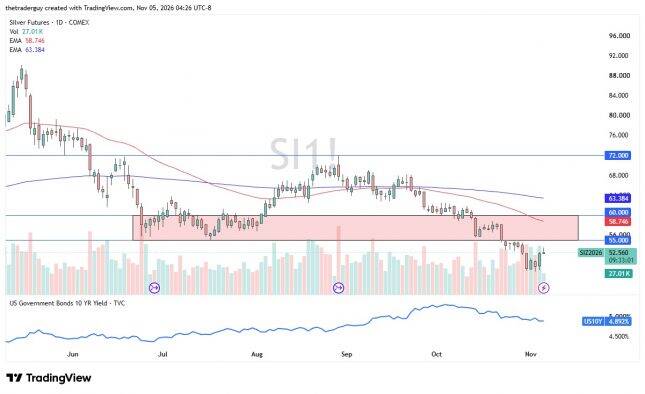
From a technical analysis standpoint, the silver market tried to rally during the early part of the session but has given back some of the gains. All things being equal, it looks like the $55 level above remains a major barrier that will be difficult to break, especially as we head towards the jobs report.
The Friday close could give us a different signal, but as things stand right now, it still looks like fading the rally is the way forward.
If you’d like to know more about how to trade gold and silver, please visit our educational area.